Blitz Bureau
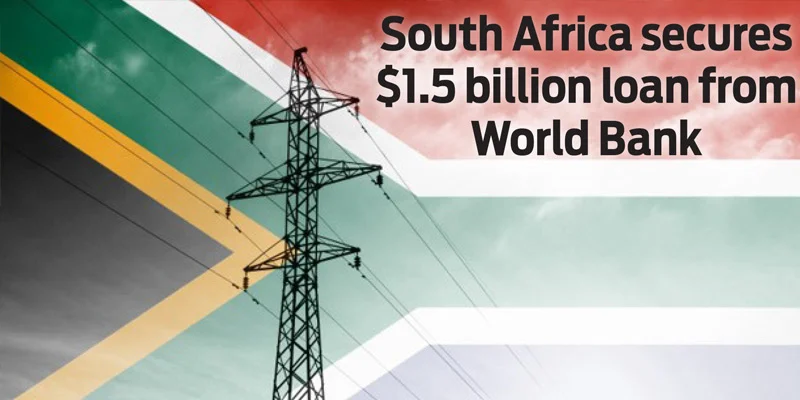
NEW DELHI: South Africa has secured a $1.5 billion World Bank loan to support reforms aimed at modernising its infrastructure and creating hundreds of thousands of jobs.
It will help the country confront chronic challenges in electricity supply, freight transport, and water and sanitation services that have long constrained economic growth.
The International Bank for Reconstruction and Development loan is the fourth in a series of stand-alone Development Policy Loans to South Africa since 2022, aimed at easing infrastructure bottlenecks that have contributed to a decade of meagre economic growth.
It comes as the government intensifies efforts to remove key infrastructure bottlenecks, improve service delivery, and stimulate investment across critical sectors of the economy.
The National Treasury says the loan offers a favourable interest rate and flexible repayment terms, contributing to minimising an increase in debt servicing costs.
It adds that together with financing from other multilateral lenders, the loan has enabled the government to meet its 2026/27 foreign currency borrowing requirement of $3.2 billion.
The World Bank said the programme could help enable nearly 600,000 jobs, with most expected to come from improvements in electricity generation and freight transport.
Electricity shortage
Persistent electricity shortages, congestion at ports and rail networks, and deteriorating municipal water infrastructure have constrained mining, manufacturing, and exports. “The operation builds on reforms that are already showing results,” the World Bank said in a statement.
“Load shedding has been virtually eliminated for a year and a half, private investment in renewable energy has increased sixfold, and rail and port freight volumes have risen by more than 50 per cent since 2023.”
Scheduled power outages – known locally as load shedding – have become increasingly infrequent after years of being an almost daily occurrence, thanks to efforts to fix the state-owned power utility under a reform programme launched by President Cyril Ramaphosa.