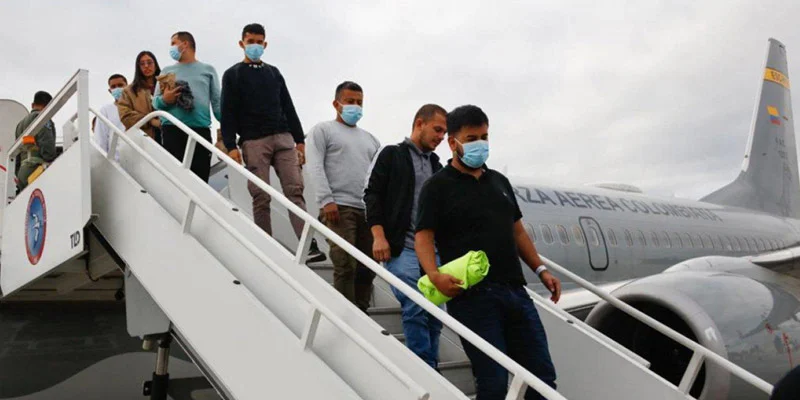
NEW DELHI: Liberia is one of several countries that have agreed to take migrants being deported from the US under the Trump administration’s antiimmigration crackdown. The arrivals are coming to a nation whose history is deeply tied to migration from the US.
Nearly two centuries ago, free and formerly enslaved Black Americans crossed the Atlantic to settle in what would become Liberia – a name that translates as “land of the free.” Now, a country shaped in part by that migration is accepting people the US wants to remove.
For Liberians, that has thrown up a mix of feelings in a country still recovering from a long and bloody civil war.
“Back then, people needed somewhere they could be free, accepted and welcomed. Now, people are being rejected from the US, and Liberia is opening its doors to them,” said Pheta Morris, 48, a descendant of the Black Americans who settled in Liberia. “I think about the AmericoLiberians — people who were rejected where they were and needed somewhere to go, and Liberia opened its arms to them,” she said.
Reuters reported that five migrants who refused to disembark after arriving in Monrovia were flown instead to Equatorial Guinea in Central Africa, where they are held with more than 30 other migrants previously sent there by the US.
The first group of free Black Americans arrived in Liberia in the early 1820s. Over the following decades, thousands more made the journey, with the American Colonization Society helping to establish settlements along the West African coast.
The US State Department says about 16,000 Black Americans migrated to Liberia during the 19th century. Africans rescued from slave ships by the US Navy were also brought to Liberia. The settlements eventually formed the Republic of Liberia, which declared independence in 1847.
‘POVERTY LEVEL HIGH’
Liberia began rebuilding after a 14-year civil war ended in 2003, but the country still needs major investment. Poverty levels remain high and youth unemployment stands at 40%, according to African Development Bank data.
Local residents are worried how the country would manage an influx of people from abroad. The country is woefully short of housing and medical infrastructure.
But Liberian authorities described the arrangement as humanitarian and said the deportees will be treated as guests who can seek asylum or leave the country.