Blitz Bureau
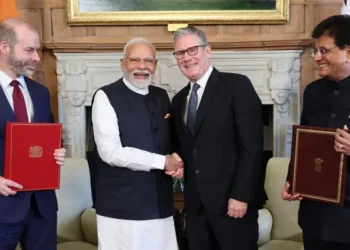
NEW DELHI: The Comprehensive Economic and Trade Agreement between India and the United Kingdom has been in force since July 15. Most coverage of it has been about whisky and cars. The clause with the widest reach over an Indian family’s finances was signed alongside it and has barely been explained. Entering into force the same day was a separate Agreement on Social Security Contributions — the instrument that decides whether an Indian professional posted to Britain pays into two national insurance systems at once, or one.
Take the trade half first, because the numbers are large and worth stating plainly. The UK eliminated duties on 99 per cent of Indian tariff lines on entry into force, covering close to the entire value of bilateral trade. The tariffs removed are not symbolic: up to 70 per cent on some processed foods, 21.5 per cent on marine products, 18 per cent on engineering goods and auto components, 16 per cent on leather. Bilateral trade in goods and services was worth nearly £48 billion in 2025, and the two governments have set a target of roughly doubling it. On the first day of implementation, more than 50 consignments worth over $140 million left Indian ports under the agreement — a small number in trade terms, but a meaningful one in administrative terms, because it means the certificate-of-origin machinery worked from day one.
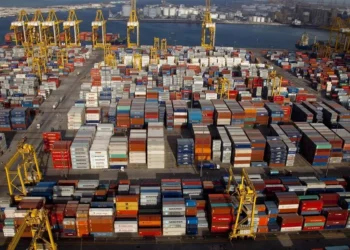
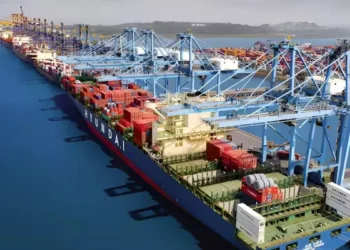
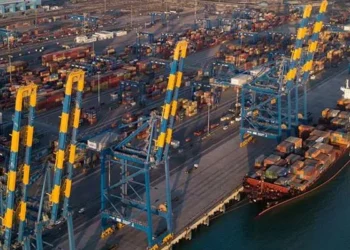
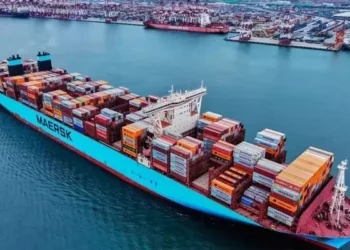
[ PHOTOGRAPH ] Containers stacked on a cargo vessel at a commercial port
Day one worked: over 50 consignments worth more than $140 million were dispatched under CETA on July 15 — evidence that origin certification and customs systems were ready, which is where most new trade agreements stumble first.
Tariff schedules are read by exporters. Social security agreements are read by families. Only one of them shows up in a monthly salary slip.
At a Glance
• In force since: July 15, 2026 — CETA and the Agreement on Social Security Contributions together
• Signed: July 2025, after 14 rounds of negotiation
• UK duty elimination: 99% of Indian tariff lines from day one
• Tariffs removed include: up to 70% on some processed foods, 21.5% marine, 18% engineering and auto components, 16% leather
• First-day dispatches: 50-plus consignments worth over $140 million
• Bilateral trade base: nearly £48 billion in goods and services in 2025
• Chapters: close to 30, including digital trade, MSMEs, labour, gender, environment and government procurement
Now the payroll clause. Indian professionals sent to Britain on temporary postings have long faced a specific and rarely discussed penalty: contributions deducted for British national insurance during a stay too short to earn any British benefit, while their Indian provident fund obligations continued. The Agreement on Social Security Contributions removes that double payment for the covered period. For the individual, it is a straightforward rise in take-home pay. For the Indian technology, engineering and professional services firms that rotate staff through UK client sites, it lowers the landed cost of an Indian employee — which is the mechanism by which a diplomatic instrument turns into an actual contract win, and then into a job in Pune or Hyderabad rather than in Manchester.
What deserves saying without spin is that access is not the same as sales. Duty-free entry lowers the price at the border; it does not by itself get an Indian marine exporter through British food-safety certification, or an auto-component maker onto an approved-supplier list. India’s constructive work over the next year is unglamorous: testing and certification capacity, faster laboratory turnaround, and helping smaller exporters — who benefit most from a 21.5 per cent tariff disappearing and can least afford the compliance staff to claim it — actually file the paperwork. There is a useful precedent to draw on: the same institutional muscle is being built for the India–Oman agreement that took effect on June 1 and for the wider Gulf negotiations. Three weeks in, the agreement has done what an agreement can do. The next stretch belongs to exporters and to the officials who certify them.