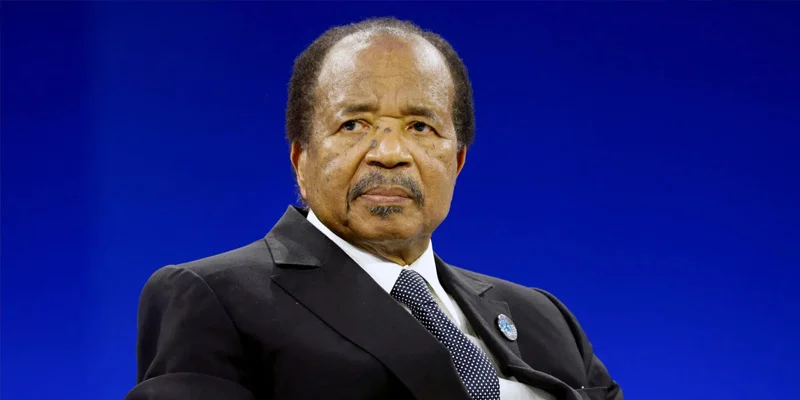
For the past two months, the man who has ruled Cameroon since 1982, when as prime minister he assumed power following the resignation of the sitting president, has been thousands of miles away. He left on June 7 for what his office called a “brief private stay in Europe” — now his longest uninterrupted absence from the Central African nation in years.
The man is Paul Biya, who won his first presidential election in Cameroon in 1984, and won a disputed eighth term last year that could keep him in office until he is nearly 100. Last week, government spokesman René Emmanuel Sadi told French radio RFI that Biya was in Geneva, Switzerland, and was not hospitalized, but did not give more detail on his whereabouts.
Biya is Cameroon’s second president since independence in 1960 and one of the world’s longest-serving leaders. He first won office in 1984 under a one-party system, then won six more elections after multiparty politics was introduced.
He has spent extended periods abroad during his presidency. But his latest absence has revived questions about his health and who is running the country while he is away.
Rumors about Biya’s health and whereabouts have long been part of public life in Cameroon, where he is rarely seen in public. His office has repeatedly had to push back against speculation that he was seriously ill or had died. In 2024, the government banned media discussions about his health, calling them a national security matter.
Aging leaders
Biya’s long rule also reflects a wider contrast across Africa. The continent has the world’s youngest population, but several countries are still led by aging leaders whose political careers began decades ago, including former liberation figures now governing in a different era.
For millions of Cameroonians, Biya is the only president they have ever known.
Iyodi, who finished eighth in last year’s presidential election, in which several candidates, including one of Biya’s main challengers, were barred from contesting, has called on parliament to ask Cameroon’s Constitutional Council to consider whether Biya’s absence amounts to a vacancy in the presidency.
Despite being away, Biya has continued to make key decisions from abroad, including a major military reshuffle announced earlier this month.
PROBLEMS APLENTY
Cameroon is plagued by bad roads, frequent power cuts, corruption and a lack of jobs for young people.
Health is also a major concern, which is out of reach for most Cameroonians.
Life expectancy in the country is below 70 years. However, Biya has far outlived that due to access to medical healthcare abroad, which the ordinary Cameroonian cannot access due to poverty, says an analyst.
Whenever Biya eventually leaves office, his successor will inherit a country also facing attacks by Boko Haram militants in the north and deep economic frustration among young people.