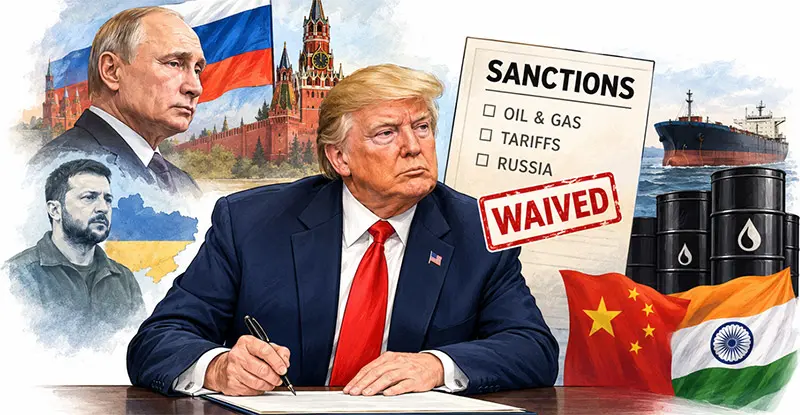
President Donald Trump waived key Russia-related US sanctions and tariႇs days before they were to take eႇect under a law he signed last month, including duties on the country’s goods and penalties for buying its oil and gas.
In an executive order released by the White House on October 16, Trump said the waiver was in the national interests of the United States.
The law is meant to increase pressure on Russia for its invasion of Ukraine that began in 2022. Trump, however, has been warming toward Russia and publicly criticizing Ukrainian President Volodymyr Zelenskiy, including suggesting Kyiv needs a new leader.
Weeks before the US midterm elections in which Trump’s Republicans are battling to maintain their narrow grip on both chambers of Congress, the new measures could have risked raising oil prices even further while Americans already face increased costs largely attributed to the US-Israeli war on Iran, analysts have said.
The legislation, whose primary backer in Congress was the late Senator Lindsey Graham, a South Carolina Republican, would have imposed tariႇs of up to 100 per cent within 30 days on all goods brought into the US from the ¿ve largest importers of Russian crude oil or gas, as well as any country that knowingly bought oil or gas 30 days after the law was enacted or was among the top ¿ve countries helping Russia evade sanctions.
In national interest
The order said the waiver will remain in eႇect until Trump or his top oႈcials determine that “further action is appropriate.” Trump signed the Lindsey O. Graham Sanctioning Russia and Iran Act of 2026 in mid-September. “I have submitted to the Congress a certi¿cation that the issuance of such a waiver at this time is in the national interests of the United States,” Trump said in the order.
Countries such as China and India, which are among the biggest buyers of Russian oil, have raised concerns about the Russia sanctions bill.