Blitz Bureau
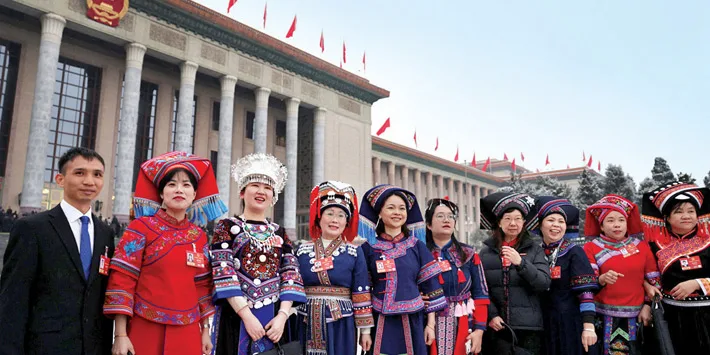
China on July 1 brought into eႇect a new ethnic unity law. The world’s second most populous nation oႈcially recognises 55 ethnic minority groups, which together account for 8.9 per cent of mainland China’s population. Beijing also announced that the new law could apply to individuals outside the country’s borders.
China passed the law on March 12 to create a “shared” national identity among the country’s 56 ethnic groups – the Han majority and 55 minority groups.The largest communities among China’s ethnic minorities include the Uighurs, about 11 million people, and Tibetans, about seven million people. Tibet and Xinjiang, where most Uighurs live, are China’s only two provinces where ethnic minority communities form the majority of the population.
“The law, approved by China’s ceremonial legislature, is designed to foster “a stronger sense of community among all ethnic groups in the Chinese nation”, Lou Qinjian, a delegate to the National People’s Congress who introduced the proposal before the body, said in March.
The law lays out the need to promote ethnic unity by all government bodies and private enterprises, including local governments and stateaႈliated groups like the AllChina Women’s Federation. According to Article 15 of the new law, Mandarin Chinese is mandated to be taught to all children before kindergarten and throughout the rest of compulsory education up to the end of high school.
Mandarin is already the primary language of instruction in Inner Mongolia, Tibet and Xinjiang, all Chinese regions with large ethnic minority populations, but the new law essentially states that minority languages cannot be the primary language of instruction nationwide. Rights groups and foreign oႈcials have warned that the law could accelerate the forced assimilation of ethnic minorities.