NEW DELHI: Our father, Shaheed Nanak Singh was a true visionary. He could foresee the terrible consequences of religious disharmony. He pleaded with the Muslim leaders of his time not to “cut and run”, because he understood a fundamental truth: once a country is created on the basis of religious hatred, it becomes extremely difficult to remove that hatred. Indeed, to preserve such a separate identity, successive generations may find themselves compelled to create and perpetuate even greater divisions.
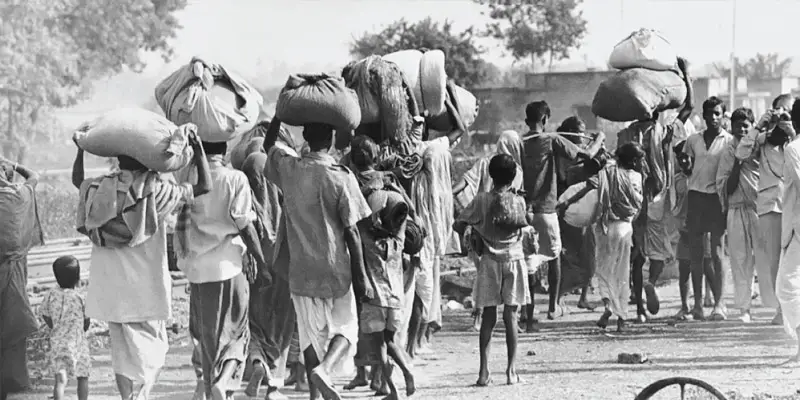
The tragedy of 1947 should have taught us this lesson forever. More than a million innocent people lost their lives, while around 15 million were uprooted and became refugees in the very land in which their families had lived for generations.
Critical questions
Yet, sadly, some misguided Sikh separatists appear determined to ignore these lessons. A small number of people, many of whom are foreign nationals, advocate repeating the very division that brought such death, destruction and misery in 1947.
One must ask: how much hatred would be generated if Sikhs were to separate themselves from the wider Indian civilisation from which their faith emerged?
India is a predominantly Hindu country, yet its Constitution guarantees equality to citizens of every faith. Hindus have traditionally revered the Sikh Gurus and the Sahibzadas for their courage, sacrifice and exemplary lives.
India celebrates the teachings and sacrifices of the Sikh Gurus not merely as Sikh history, but as part of the nation’s heritage and the universal story of humanity.
The Sikh Gurus themselves travelled extensively across India, leaving a profound spiritual and historical footprint. What, then, would happen to the numerous historic gurdwaras scattered across India? What would happen to the millions of Sikhs who have made their homes outside Punjab? What would happen to Sikhs serving proudly in the Indian armed forces, in Government and across every profession and sector of Indian society?
These are not minor questions. They go to the very heart of the consequences of separatism.
Enormous challenges
Punjab would also face an enormous economic and geopolitical challenge. A small population surrounded by a much larger India would have to consider how it could sustain itself economically, secure trade routes and maintain access to the outside world.
Would a landlocked ‘Khalistan’ become dependent upon Pakistan? And if so, what price might Pakistan demand for that dependence?
The history between Sikhs and the Mughal Empire is well known. Would old grievances be revived? Could Pakistan exploit Khalistan’s economic and geographical vulnerability by using narcotics, terrorism or political pressure? Without independent access to a seaport or control over surrounding airspace, would a new state be in a position to resist such pressure?
A nation that begins its existence dependent upon another country for its survival could ultimately find itself having to accept demands that compromise its sovereignty.
This is why I repeatedly say: “We are all blessed with sight, but very few are blessed with vision.”
The real test of leadership is not to exploit people’s emotions, but to foresee the consequences of one’s actions for generations yet unborn.
Unfortunately, some of the loudest voices advocating separatism appear to have given little serious thought to the economic, political, social and security consequences of dividing Punjab and separating Sikhs from the wider Indian nation in which millions of Sikhs have lived, prospered and contributed for generations.
Community’s future
The irony is that a small number of Canadian citizens and other people living abroad seek to determine the future of a Sikh community that has made an extraordinary contribution to India and enjoys respect throughout the world.
The future of the Sikh community should not be decided by those who live thousands of miles away and will not have to bear the consequences of the division they advocate.
We must learn from 1947 rather than recreate it. Our duty is to build bridges between communities, not walls; to strengthen India rather than fragment it; and to ensure that the sacrifices of our forefathers were not made in vain.
Unfortunately, some of the loudest voices advocating separatism appear to have given little serious thought to the economic, political, social, and security consequences of dividing Punjab