
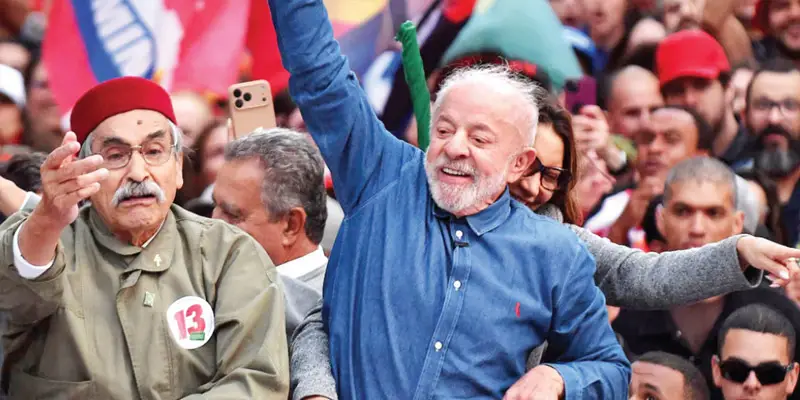
Brazilian President Luiz Inacio Lula da Silva won an unprecedented fourth term on October 25, the country’s electoral court said, in a shock result that defied polls, precedent and global anti-incumbent sentiment to put the brakes on a wave of right-wing election victories across Latin America.
Lula, an icon of the global left and the most dominant force in Brazilian politics this century, defeated Senator Flavioj Bolsonaro, the eldest son of former President Jair Bolsonaro. The senator had finished first in the election’s first round and hoped to revive his father’s far-right movement.
At times, Lula’s reelection looked like a long shot, as voters soured on him and his Workers’ Party after years of corruption scandals and rising prices, while sweeping societal changes left the former metalworker and union leader looking out of touch with an increasingly appbased economy and its growing ranks of informal workers.
Lula’s victory marks another comeback in a career full of them. The 80-year-old was jailed from 2018 to 2019 on corruption charges that were later overturned, paving the way for him to beat Jair Bolsonaro in the 2022 election. Pollsters said better-thanexpected turnout had powered Lula to victory. Leonardo Barreto, the co-founder of consultancy Think Policy, said voters had chosen Lula’s familiar embrace over Bolsonaro’s novelty.
Track record
During the campaign, Lula pointed to a track record of falling poverty and inequality, while unemployment, illiteracy and deforestation hit record lows during his third term.
He warned Bolsonaro would cut welfare spending, backslide on social advances and hand over Brazil’s sovereignty to US President Donald Trump, whose State Department led a campaign to get the Bolsonaros back to power.
Lula’s win deprives Trump of a major addition to what has been a growing bloc of friendly right-wing Latin American governments that have embraced Washington’s agenda on security and migration. Lula becomes the first candidate since Brazil’s return to democracy in the 1980s to be elected after finishing second in the first round.
Tough times ahead
Lula’s fourth term could be his most difficult yet, after Brazil elected its most conservative Congress since returning to democracy in the 1980s.
Combined, Bolsonaro’s Liberal Party (PL) and allied parties could control over 280 seats in the lower house and up to 50 seats in the Senate, enough for comfortable majorities in both chambers.
An expert said Lula will face waning influence over Supreme Court nominations, unwieldy party coalitions, and even the threat of impeachment.