Blitz Bureau
NEW DELHI: The Venezuelan National Assembly on April 9 approved a new law meant to modernize the country’s decrepit mining industry and lure private companies to excavate Venezuela’s untapped riches of gold and critical minerals.
The sweeping changes, in a Socialist-led country that had long exerted state control over its mines, are the latest example of the Venezuelan government’s compliance with the Trump administration since the United States captured the country’s leader, Nicolás Maduro, in January.
The Venezuelan Legislature, controlled by Maduro’s ruling Socialist Party, passed the new law one month after the US interior minister, Doug Burgum, brought dozens of American mining executives to meet with the country’s acting president, Delcy Rodríguez. Both officials vowed to open Venezuela’s coveted deposits to American investment.
The proposal passed by a unanimous vote. Venezuela sits on a mineral fortune that remains largely untapped. The country is believed to have one of the largest gold reserves in the world. It is also thought to hold a wealth of rare earths and vast reserves of bauxite, iron, coal, copper, nickel and coltan, a black ore used in the manufacturing of such items as smartphones and satellites.
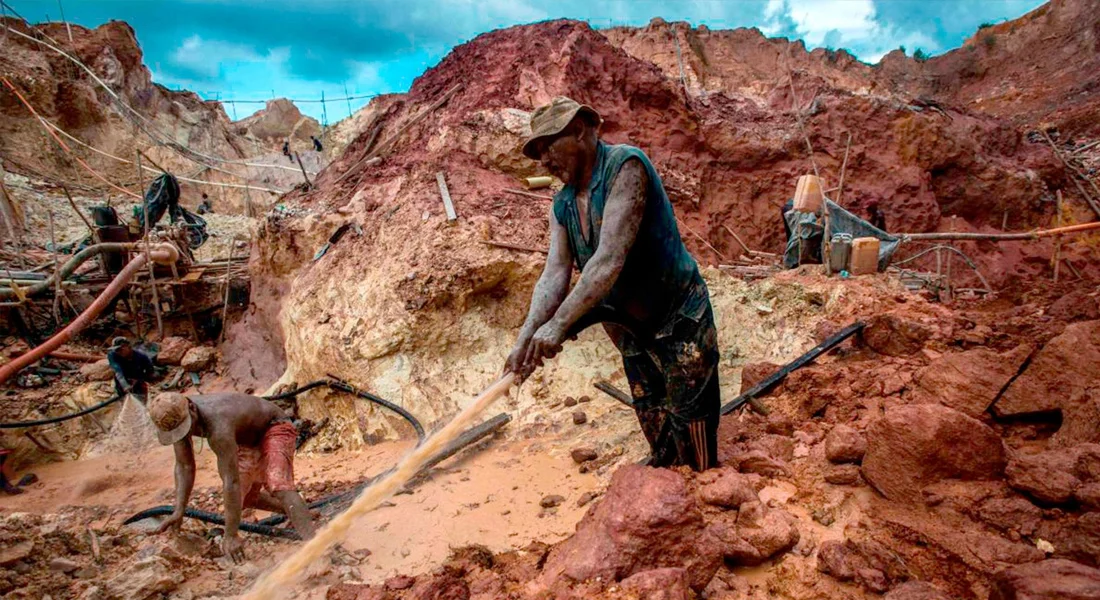
But the ambitions to attract investors are bound to clash with the perilous reality in Venezuela’s mining regions. Entrenched gangs, guerrilla groups and corrupt military officials control many mining operations. The stranglehold is often maintained with the forced labor of indigenous people and kickbacks to Venezuelan officials, according to experts.
Illegal mining flourished under Maduro in the southeastern state of Bolívar and in large areas of the Amazon rainforest, where mining is prohibited but has boomed illegally, leading to deforestation and contamination. Most of Venezuela’s deposits are in an expansive jungle territory known as the Orinoco Mining Arc, an area larger than Cuba, making it hard to police.
Despite the challenges, the new law is meant to formalize Venezuela’s mining industry, which some market researchers project could generate at least $8 billion in annual revenue by 2036.