• About us
  • Team
  • Privacy Policy
  • Contact
Tuesday, October 13, 2026
  • Login
No Result
View All Result
World's first weekly chronicle of development news
  • Blitz Highlights
    • Special
    • Spotlight
    • Insight
    • Entertainment
    • Sports
  • Opinion
  • Legal
  • Perspective
  • Nation
    • East
    • West
    • North
    • South
  • Business & Economy
  • World
  • Hindi Edition
  • International Editions
    • Dubai
    • Tanzania
    • United Kingdom
    • USA
  • Blitz India Business
  • Blitz Highlights
    • Special
    • Spotlight
    • Insight
    • Entertainment
    • Sports
  • Opinion
  • Legal
  • Perspective
  • Nation
    • East
    • West
    • North
    • South
  • Business & Economy
  • World
  • Hindi Edition
  • International Editions
    • Dubai
    • Tanzania
    • United Kingdom
    • USA
  • Blitz India Business
No Result
View All Result
World's first weekly chronicle of development news
No Result
View All Result

Key leadership initiatives

by Blitz India Media
April 6, 2024
in Perspective
0
covid
Team Blitz India

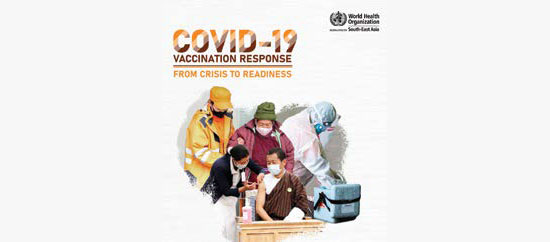
NEW DELHI: The World Health Organisation (WHO), together with partners, facilitated the development of a national deployment and vaccination plan (NDVP), which not only set standards to ensure preparedness for vaccination for all Member States in the region, but also helped to identify priority groups and plan accordingly for vaccination.

Coordinating with governments and partners: The Regional Working Group (RWG) on immunization was formed under the technical leadership of the Regional office. It included partners and donors, and was instrumental in identifying gaps and supporting countries in rolling out COVID-19 vaccination. The RWG also provided support for independent reviews of the NDVPs and ensured that they are robust.

Supporting Member States: WHO worked with all affected Member States, assessing the situation in the countries and building global response protocols. It facilitated the preparation of country-specific Covid-19 preparedness and response plans (CPRP) based on initial assessment of the risks and vulnerabilities, gaps in capacity at the national and subnational levels, and the resources required to address these gaps. It helped countries to develop their NDVPs based on their initial assessment of the situation at the local level and following simulation exercises.

Periodic reviews

These plans were periodically reviewed as the pandemic evolved and challenges arose. In a number of countries, WHO ensured a surge of human resources to support vaccination activities, from microplanning to vaccine delivery to monitoring implementation. It also picked up early signals of rumours of vaccine hesitancy and addressed them in a timely manner. Demand generation/demand management and risk communication and community engagement (RCCE) for Covid-19 vaccines were conducted with support from WHO, UNICEF and partners.

WHO helped to establish standard operating procedures (SOPs) to grant emergency use authorisation (EUA) for vaccines in Member States that lacked policies on public health emergency situations, to prevent delays in deployment

Guiding the Covax facility: The RWG convened discussions with national technical advisory groups to improve allotment of vaccines as per each country’s requirements so that the vaccines reached the last target priority groups as per the prioritization matrix of the Strategic Advisory Group of Experts (SAGE) on immunization.

Setting up SOPS for EUA: WHO helped to establish standard operating procedures (SOPs) to grant emergency use authorisation (EUA) for vaccines in Member States that lacked policies on public health emergency situations, to prevent delays in deployment. These helped in overcoming legal and vaccine export restrictions. WHO worked with national regulatory authorities (NRAs) to enable swift sharing of information for timely EUA, ensure rapid deployment of vaccines and break down barriers between countries, manufacturers/donors and recipients.

Collaboration, tech transfer

WHO worked with the national immunisation technical advisory groups (NITAGs) of every Member State to ensure swift and effective implementation of Covid-19 vaccination with the best available scientific evidence related to Covid-19 vaccines and their implementation. The capacity of NITAGs was built over time prior to the pandemic. This was instrumental in supporting Covid-19 vaccination with translation of SAGE recommendations to country-specific contexts.

Facilitating technology transfer: A significant role played by WHO and other partners was in the area of vaccine technology transfer. Whereas traditionally new vaccine development could take anywhere between one to two decades, during the Covid-19 pandemic, there was a need to roll out the vaccine in just about a year. Ribonucleic acid (RNA) platforms were used to reduce the time taken for development, without compromising on the safety and efficacy of the vaccine.

WHO and partners developed a blueprint for technology transfer and negotiated with manufacturers and technology owners as well as with countries where these manufacturers were based, to facilitate technology transfer for scaling up vaccine manufacture globally.

Support to facilitate handling: The pandemic was an opportunity to augment supply chain management in countries. Gaps in supply chain and cold-chain management were identified and countries were supported to close the gaps. With the help of effective supply chain management, training and capacity-building of frontline staff, case management, and monitoring and reviewing of the evolving situation, WHO and partners were able to support Member States to efficiently vaccines.


Related Posts

Ayurvedic Medicines Get Stricter Quality Controls
Perspective

STRENGTHENING regulatory norms

October 3, 2026
India Expands Ayush’s Global Healthcare Footprint
Perspective

Expanding international partnerships

October 3, 2026
Ayurveda: Building a Stronger Healthcare Ecosystem
Perspective

In the WHO module

October 3, 2026
Ayurveda: Building a Stronger Healthcare Ecosystem
Perspective

Ecosystem to support growth of AYURVEDA

October 3, 2026
PM SHRI School Selection Process
Perspective

India’s push for future-ready schools

September 18, 2026
PM SHRI School Selection Process
Perspective

Selection is built on quality benchmarks

September 18, 2026
Load More
Next Post
Patna High Court

Calling wife bhoot, pisach no cruelty, observes Patna HC

Recent News

Asian Champions Trophy 2026
News

Pathak returns as India names squad for Asian Champions Trophy

by Blitz India Media
October 13, 2026
0

New Delhi, 13 October: Hockey India on Tuesday announced the Indian men’s squad for the Asian Champions Trophy Punjab 2026,...

Read moreDetails
Electronics production grows seven-fold : MeitY

New Delhi, 13 October : India’s fintech sector raised $2.2 billion in the first nine months of 2026 (January 1, 2026–September 30, 2026), up 14 per cent from $1.9 billion in the same period a year earlier, a report said. The report from data intelligence platform Tracxn Technologies Limited said funding rounds dipped from 260 to 153, adding that the funding was concentrated in a smaller number of large late‑stage rounds, with five mega‑rounds of $100 million or more accounting for $1.1 billion or 48 per cent of total capital. The report said in the first nine months of 2026, digital lending and payments topped the category rankings, while Bengaluru accounts for over three-fifths of all capital raised. On the exit side, IPOs saw a 50 per cent uptick while overall acquisitions slowed. As many as 30 companies raised their first funding round, down 49 per cent from 59 in the previous year. Series A and later rounds totalled 77, down 31 per cent from 112. Late-stage funding (Series C+, PE, and pre-IPO) led the mix, rising 95 per cent to $1.5 billion in the first nine months of 2026 — up from $751 million during the same period in the previous year. This capital surge pushed late-stage investments to 67 per cent of total market funding, the report noted. Earlier stages experienced contractions in capital and deal counts. Early-stage funding fell 33 per cent to $668 million across 52 rounds, compared to $1 billion across 82 rounds in nine months of 2025. Seed funding fell 57 per cent to $73.8 million across 76 rounds, down from $173 million across 148 rounds. New unicorns crossed the billion-dollar threshold in an average of 7.1 years after their Series A funding. Moreover, the industry saw 3 IPOs in nine months of 2026, up 50 per cent from 2 in the previous year, alongside 11 acquisitions, down 45 per cent from 20.

October 13, 2026
Indian stock market

IBM and MeitY Startup Hub partner to support India’s deep-tech startups with AI, cloud, quantum computing and mentorship.

October 13, 2026
IBM

IBM, MeitY sign MoU to boost India’s deep-tech

October 13, 2026
Solar panels supplying power in Africa

India Growth Story: Start-ups, Trade, Data and Khadi

October 13, 2026

Blitz Highlights

  • Special
  • Spotlight
  • Insight
  • Entertainment
  • Health

International Editions

  • US (New York)
  • UK (London)
  • Middle East (Dubai)
  • Tanzania (Africa)

Nation

  • East
  • West
  • South
  • North
  • Hindi Edition

E-paper

  • India
  • Hindi E-paper
  • Dubai E-Paper
  • USA E-Paper
  • UK-Epaper
  • Tanzania E-paper

Useful Links

  • About us
  • Team
  • Privacy Policy
  • Contact

©2024 Blitz India Media -Building A New Nation

Welcome Back!

Login to your account below

Forgotten Password?

Retrieve your password

Please enter your username or email address to reset your password.

Log In

    No Result
    View All Result
    • Blitz Highlights
      • Special
      • Spotlight
      • Insight
      • Entertainment
      • Sports
    • Opinion
    • Legal
    • Perspective
    • Nation
      • East
      • West
      • North
      • South
    • Business & Economy
    • World
    • Hindi Edition
    • International Editions
      • Dubai
      • Tanzania
      • United Kingdom
      • USA
    • Blitz India Business

    ©2024 Blitz India Media -Building A New Nation