Blitz India Business
NEW DELHI: September 23 is celebrated as Ayurveda Day, aligning with the autumnal equinox to reflect natural balance. Under the theme ‘Ayurveda for a Healthier Tomorrow’, the Government is executing a national strategy to revive traditional healthcare.
The Government is also establishing an ecosystem to support the growth of the Ayurveda sector. This is through upgrading education, advancing evidence-based R&D, establishing drug standards, global outreach, and integrating Ayurveda with modern medicine.
National missions
Through its National Ayush Mission (NAM), and the National Health Mission (NHM), the Government is expanding, modernising and integrating Ayush systems, including Ayurveda, into mainstream public medicine. The two national missions, run by the Ministry of Ayush and the Ministry of Health and Family Welfare, are establishing Ayush clinics, hospitals, departments and community public health centres across the country.
Existing health clinics (dispensaries) are being modernised and upgraded into better-equipped wellness centres called Ayushman Arogya Mandirs. There are 12,260 Ayush centres functional as on September 19 this year. Such centres are also being co-located with other community health centres.
The Government funds salaries for 25,322 Ayush doctors and 5,666 Ayush paramedics working across various states and UTs. It is also adding traditional medicine counters and doctors inside standard public healthcare facilities, including local health centres and district hospitals.
Besides, the Government is taking several other steps, which include: building new integrated hospitals; providing essential medicines; running community health programmes and awareness campaigns; opening new medical colleges; and improving medical schools.
Telemedicine service
The Government offers a free telemedicine service, eSanjeevani, which has served over 50 crore patients. In addition to conventional medicine, eSanjeevani also offers Ayush OPD services, allowing patients to virtually consult doctors specialised in Ayurveda.
It has also updated insurance policies to cover Ayush treatments under health insurance plans. In 2024, the Insurance Regulatory and Development Authority of India mandated that all insurers are required to offer products or add-ons covering all systems of medicine under Board-approved underwriting policies.
On February 10 this year, the All-India Institute of Ayurveda (AIIA) signed MoU with the General Insurance Council (GIC). This empanelled AIIA with all 32 general insurance companies, marking the first time an Ayush institution entered into a universal empanelment agreement for cashless treatment.
Health personnel
An expanding Ayush health infrastructure also needs Ayush health personnel to run it. The NAM makes provisions for the expansion of education in Ayurveda through the establishment of undergraduate and postgraduate institutions, including pharmacy and para-medical programmes.
Seventeen Ayush colleges have been approved for establishment across the country under the NAM, out of which 12 are centred on impacting Ayurvedic education. As on March 13 this year, there are 593 Ayurveda colleges, 45,245 undergraduate Ayurveda seats, and 5,673 post-graduate Ayurveda seats.
To advance research and development in Ayurveda, the Government runs several schemes aimed at modernising traditional medical practices and strengthening drug development. Central to these efforts is the AYURGYAN scheme, which provides financial backing for R&D initiatives.
Out of a total research funding pool of Rs. 17.79 crore across 34 projects, Ayurveda accounts for half of the portfolio, receiving Rs. 9.38 crore for 17 dedicated projects.
Complementing AYURGYAN scheme is the AYUR SWASTHYA Yojana, which provided financial assistance to Government or non-profit Ayush organisations for R&D into Ayush clinical and drug research, education, public health initiatives, and for the upgradation of facilities to Centres of Excellence.
Institutional support
At the institutional level, the Central Council for Research in Ayurvedic Sciences leads the scientific formulation, coordination, and promotion of Ayurvedic studies nationwide. Operating through a network of 30 national and regional institutes, it builds research capacity through fellowships, training programs, and targeted student initiatives, such as SPARK.
To make scientific knowledge accessible to everyone, the CCRAS partnered with Anuvadini AI, an Artificial Intelligence translation platform. Through this collaboration, CCRAS is translating its extensive research findings, educational resources, and quarterly medical journals into 13 regional Indian languages.
By breaking down language barriers, this initiative democratises access to Ayurvedic medical research, ensuring that students, practitioners, and the general public across India can easily read and learn from these scientific developments.
The two national missions, run by the Ministry of Ayush and the Ministry of Health and Family Welfare, are establishing Ayush clinics, hospitals, departments and community public health centres across the country
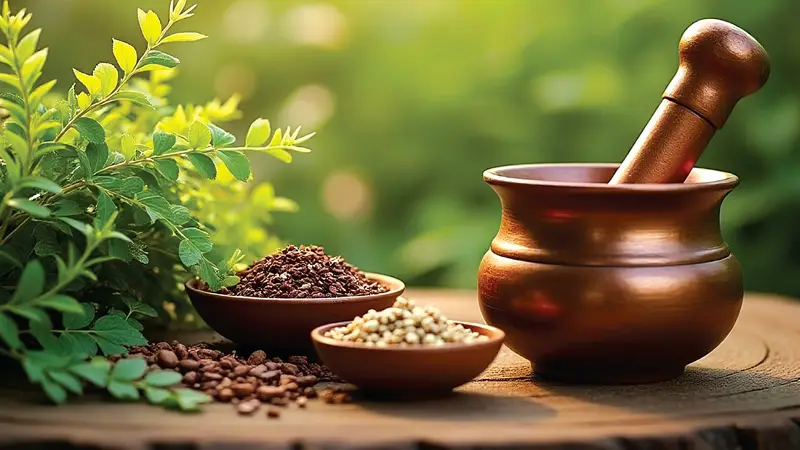
The Government actively supports farmers and research bodies in conserving, cultivating, and processing therapeutic herbs. It does so by bridging supply chain gaps, incentivising farmers while empowering local communities and maintaining pharmaceutical standards.
Ayurveda Aahara
Extending these safety principles from pharmaceuticals to nutrition, the Food Safety and Standards Authority of India, in collaboration with the Ministry of Ayush, introduced a standardised regulation for Ayurveda Aahara.
The initiative establishes a product list of authentic Ayurvedic dietary items based on authoritative classical texts. This list is also crucial for licensing and registration of traditional food manufacturers. It creates a transparent, regulated sector for traditional food manufacturers while boosting consumer confidence in India and globally.
Ayurveda’s journey from an inherited knowledge tradition to an increasingly institutionalised component of contemporary healthcare reflects its evolving relevance in modern society. The expansion of healthcare infrastructure, education, research, regulatory mechanisms, digital access, and international collaborations has created a broader ecosystem for its development and responsible integration.
At the same time, Ayurveda’s integration into public health systems and its expanding global partnerships show how traditional knowledge can engage with modern institutions and scientific inquiry. Ayurveda’s continuing evolution thus represents a dynamic interface between India’s civilisational knowledge, contemporary healthcare systems and the pursuit of holistic well-being.
Ayurveda’s journey from an inherited knowledge tradition to an increasingly institutionalised component of contemporary healthcare reflects its evolving relevance in modern society