Blitz Bureau
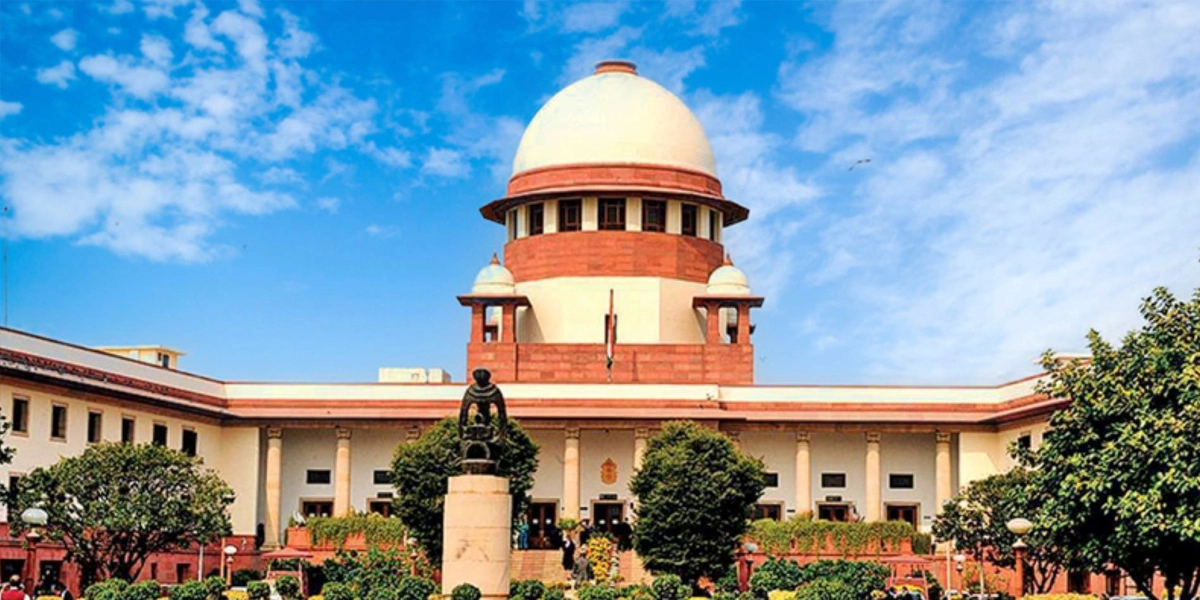
NEW DELHI: The Supreme Court has declined to issue any additional directions or frame fresh guidelines to curb hate speech across the country, holding that the existing criminal law framework is adequate to address such offences.
A Bench of Justices Vikram Nath and Sandeep Mehta on April 28 dismissed a batch of petitions seeking further judicial intervention against communal hate speeches, including matters arising from incidents such as alleged “Corona Jihad” campaigns, “UPSC Jihad” broadcasts, and inflammatory speeches delivered at various religious gatherings.
The Bench held that the creation of criminal offences and the prescription of punishments fall exclusively within the legislative domain, and constitutional courts cannot compel Parliament or state legislatures to enact new laws.
“While constitutional courts may interpret the law and issue directions to secure the enforcement of fundamental rights, they cannot legislate or compel legislation,” the top court observed, adding that at best, courts may draw attention to the need for reform, while the decision to legislate remains with Parliament and state legislatures.
Rejecting the argument that hate speech remains insufficiently addressed under current laws, the Bench said that provisions under substantive criminal law, including the Indian Penal Code, adequately cover acts promoting enmity, outraging religious sentiments, and disturbing public tranquility. “The field is therefore not unoccupied,” it said, stressing that the real concern lies in effective enforcement rather than any legislative vacuum.
Listing the remedies already available under the Code of Criminal Procedure (CrPC) and the Bharatiya Nagarik Suraksha Sanhita (BNSS), 2023, the court reiterated that registration of an FIR upon disclosure of a cognisable offence is mandatory.
“We deem it appropriate to observe that issues relating to hate speech and rumour- mongering bear directly upon the preservation of fraternity, dignity and constitutional order,” the Bench said
It said that in cases where police fail to register FIRs, aggrieved persons can approach the Superintendent of Police under Section 154(3) CrPC or Section 173(4) BNSS, and thereafter seek recourse before the jurisdictional magistrate under Section 156(3) CrPC or Section 175 BNSS, or proceed through a private complaint.
While refusing to pass new directions, the Bench acknowledged the gravity of the issue, observing that hate speech and rumour- mongering directly impact fraternity, dignity, and constitutional order.
“We deem it appropriate to observe that issues relating to hate speech and rumour- mongering bear directly upon the preservation of fraternity, dignity and constitutional order,” the Supreme Court said It added that the Union and state governments remain free to consider whether evolving societal challenges require additional legislative interventions, including amendments suggested in the Law Commission’s 267th Report of 2017.