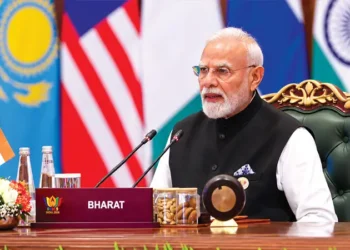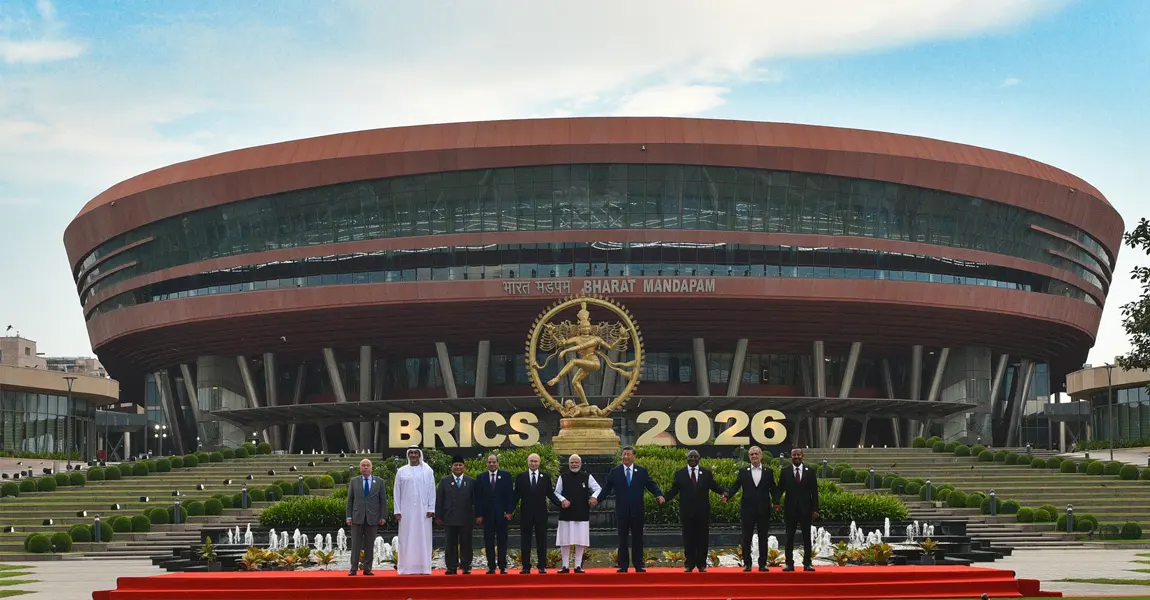
NEW DELHI: Trade, investment, strategic cooperation and the vision of a multipolar world dominated discussions on the second day of the BRICS Summit, with experts and industry leaders describing the grouping as an increasingly important platform for the Global South.
Speaking to IANS, SWFI Chairman and IBRICS 2026 Lead Co-Chair Lakshmi Narayanan said the tariff-related challenges facing many economies were not created by BRICS nations but were a consequence of the broader global trade environment, particularly the impact of US policies.
He said BRICS members had agreed to address such challenges through collective cooperation and economic coordination.
According to Narayanan, three key outcomes emerged from the summit: efforts to boost bilateral and multilateral trade, positive progress toward resolving border-related issues between India and China, and an understanding between India and Russia to expand bilateral trade to $100 billion.
Important document
Defence expert Ranjit Rai described the Delhi Declaration adopted at the summit as an important document for global security and international cooperation.
He said the event provided world leaders with an opportunity to gain a closer understanding of India and reinforced the need for collective action on issues such as climate change, security and economic development.
Rajshekhar Joshi, former Vice-Chairman of SETU Commission, said BRICS had emerged as one of the most influential examples of Global South cooperation, representing more than half of the world’s population and around 40 per cent of global GDP.
Indo Wings’ Paras Jain said India’s management of the event had enhanced the country’s global profile, while Nick Booker of Indogenius said the participation of global leaders reflected India’s growing importance in international diplomacy.
The event provided world leaders with an opportunity to gain a closer understanding of India and reinforced the need for collective action on issues such as climate change, security and economic development