
Blitz Bureau
Education Minister Pralhad Joshi chaired the first meeting of the Consultative Committee of the Parliament for the Ministry of Education for 2026 in New Delhi on November 25. Minister of State Jayant Chaudhary; Secretary, Higher Education, Deepti Gaur Mukerjee; Secretary, School Education, T. K. Anil Kumar and other senior officials from the Ministry attended the meeting.
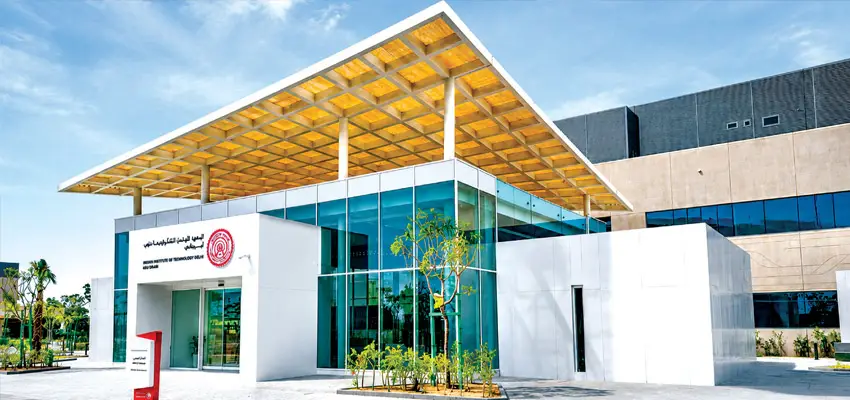
Joshi said on this occasion that the Indian knowledge system had a long history of global impact. The objective of the Ministry was to further expand the global footprint of this system. With this aim, he stated that several steps were being taken to set up campuses of Higher Education Institutions (HEIs) overseas and also facilitate the setting up of campuses of foreign universities in India.
The Minister informed that around 21 foreign HEIs were operational in the country, in addition to joint academic and research collaborations. He added that the demand for CBSE schools abroad demonstrated the credibility of Indian education programmes and their potential for scalability at the global level.
The Members of the Parliament were briefed on the various initiatives undertaken by both the Departments of the Ministry as part of the internationalisation of Indian education. The Department of Higher Education outlined the four strategies adopted to promote internationalisation – academic and research collaborations; attracting international students to study in India; allowing foreign HEIs to set up branch campuses in India; and allowing Indian HEIs to set up campuses abroad.
The Minister informed that around 21 foreign HEIs were operational in the country, in addition to joint academic and research collaborations. He added that the demand for CBSE schools abroad demonstrated the credibility of Indian education programmes and their potential for scalability at the global level.
Seventeen Letters of Intent were issued to foreign universities, under UGC Regulations, including those from the UK, the USA, Australia and Italy. The members were also briefed on initiatives including Bharat Innovates, SPARC (Scheme for Promotion of Academic and Research Collaboration), GIAN (Global Initiative of Academic Networks) and DASA (Direct Admission of Students Abroad) and the revamped Study in India (SII) portal.
The Department of School Education and Literacy informed the Members that the National Education Policy 2020 and the aspiration of Viksit Bharat 2047 were guiding a transformative shift in the Indian education system. The alignment of the curriculum with global standards, multilingual education, exchange programmes for students and teachers and the PARAKH National Assessment Centre for academic equivalence and quality alignment were among the key factors driving internationalisation.
Outside India, CBSE has 268 schools across 26 countries and an overseas regional office was also established in Dubai. A standardised assessment framework had also been implemented across affiliated schools globally to ensure uniformity.
The members appreciated the efforts taken by the Departments in the direction of internationalisation and gave their suggestions on various matters including vocational education and expanding the network of Indian educational institutions abroad.