
Sushil W Gaikwad
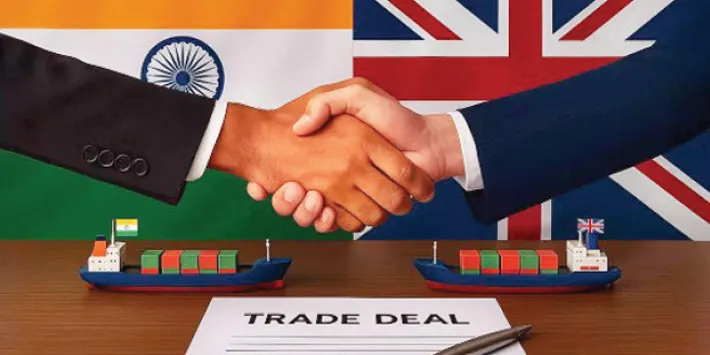
London: Four months after the India–UK Comprehensive Economic and Trade Agreement (CETA) came into force on 15 July 2026, most of the public conversation has been about tariffs. That is understandable: the agreement removes duties on nearly 99 per cent of India’s exports to the UK, covering almost the entire value of bilateral trade.
Two less visible parts of the deal may matter more to companies and investors planning long-term commitments in the UK–India corridor. The first is Government procurement. The second is investment protection, and the agreement does not provide it.
A first for India on procurement
CETA is India’s first trade deal with a comprehensive Government procurement chapter and a market access schedule. That is a significant shift for a country that has long kept public contracts largely for domestic firms.
For Indian suppliers, the agreement guarantees access to UK central government procurement. UK government guidance values this market at around £90 billion a year. Reported coverage includes the Cabinet Office, the Department for Business and Trade, National Highways and NHS Foundation Trusts. India also secured a binding commitment that Indian bidders will get non-discriminatory treatment under the UK’s social value regime, the framework that scores suppliers on community and environmental contribution as well as price.
In return, UK firms can bid for India’s Central Government tenders. Public procurement accounts for around a fifth of India’s GDP. Estimates of how much of that market CETA actually opens vary widely. Indian officials put it at around US$114 billion, while Grant Thornton cites roughly 40,000 tenders a year worth at least £38 billion. Under India’s “Make in India” rules, UK suppliers with at least 20 per cent UK content can qualify as “class-II local suppliers”. Indian firms with more than 50 per cent local content keep their “class-I” preference.
The limit: India’s states
The procurement chapter applies only to Central Government. Contracts awarded by states are not covered.
This limit matters. A large share of India’s spending on infrastructure, urban transport, energy and water is planned and procured at state level. For UK companies in those sectors, CETA opens the front door in New Delhi but not the side doors in Mumbai, Ahmedabad or Jaipur. Winning state-level work still depends on direct engagement with state governments, their development agencies and their procurement bodies.
No investment chapter and no treaty, for now
The bigger gap is on investment. CETA does not contain a comprehensive investment protection chapter. The two governments agreed to negotiate a separate Bilateral Investment Treaty (BIT) to replace the 1994 UK–India treaty, which India terminated in 2017.
That termination was part of a wider reset. After several adverse arbitration awards in the mid-2010s, India terminated around 75 bilateral investment treaties in 2016 and 2017 and adopted a more restrictive model BIT.
Negotiations on a new UK–India treaty made progress on core protections, including investor–state dispute settlement. However, reports say they stalled over two issues: India’s insistence on a full carve-out for taxation, and the UK’s request for most-favoured-nation treatment. In September, Indian officials indicated that treaties with the UK, the EU, Oman and Qatar were nearing completion under a revised framework awaiting Union Cabinet approval. As of this writing, no treaty has been signed.
The UK’s former chief trade negotiator, Harjinder Kang, has said investment protection was among the top priorities British businesses raised before talks began. He described a treaty as an important next step for the relationship.
What this means for business now
Until a treaty is in place, the protection available to an investor depends largely on how the investment is structured and what its contracts say. In practice, that means:
• Treaty due diligence. Investors should check which treaty, if any, applies to their investment, based on its structure and the nationality of the investing entity. Assumptions based on the old UK–India treaty no longer hold.
• Contractual safeguards. Dispute resolution clauses, choice of law and stabilisation provisions do much of the work a treaty would otherwise do.
• Procurement readiness. Indian suppliers targeting UK contracts need to show credible social value commitments. UK suppliers targeting India need to manage local-content thresholds carefully.
• State-level engagement. For infrastructure, energy and urban projects, the central-level procurement chapter is only the starting point.
Closing the gap
CETA has improved market access. Turning that access into contracts won and capital deployed still takes structuring advice, policy engagement and access to government at both central and state levels.
That is the space the UK India Strategic Investment Forum (UKISIF) was set up to work in. It advises investors on entry and structuring in both directions. It brings investor concerns, including procurement access and investment protection, to policymakers. It also convenes meetings with ministries and state bodies, including through its memorandum of understanding with the Maharashtra Economic Development Council. Each engagement is tracked to a named owner and an agreed next step.
The agreement is the framework. Results will depend on what businesses and governments on both sides do with it.
The author is Founder & Director of the UK India Strategic Investment Forum. He is the Chief Advisor and Editor (UK) of Blitz India Media Group.

British products which are cheaper now for Indians
According to the British policy paper, products including cosmetics, whiskies, chocolates, soft drinks and lamb will be cheaper and benefit from the tariff cut.
Manufacturing sectors are also expected to benefit from the agreement, including cars, electrical circuits, high-end optical products and medical devices.
The deal also extends towards market access and will exempt Indian workers who temporarily move to the UK for work from contributing to National Insurance for five years.
Minister Goyal also said “over 75,000 professionals & over 900 companies expected to benefit” from the CETA as it comes into effect.
“IT, ITeS, financial, professional, healthcare, education, engineering, telecommunication, consultancy services to gain,” he added.

Indian goods which are cheaper now for the UK
Duties on marine exports, textiles, leather, footwear and gems and jewellery will be removed, helping Indian suppliers compete more effectively in the British market.
Spices, vegetables, processed food and fruits will also be cheaper in the UK following the agreement.
Still unaffected by the deal
While the agreement covers a range of sectors, it does not include poultry, eggs, sugar or dairy. India has also excluded apples, walnuts and specific categories of gold bars and smartphones.
Take this chart only if needed
| UK product | Pre-CETA Indian tariff | Tariff from July 15, 2026 | Long-term tariff commitment |
|---|---|---|---|
| Scotch whisky | 150 per cent | 75 per cent | 40 per cent after 10 years |
| British automobiles (passenger vehicles) | Up to 100 per cent + (varies by vehicle) | Reduced under Tariff Rate Quota (TRQ) | Further phased reductions |
| Gin | Varies | Tariff reduction begins | Phased reduction |
| Other UK whisky | 150 per cent (where applicable) | Reduced under CETA schedule | Phased reduction |
| Toiletries | Up to 22 per cent | Reduced to 0 per cent immediately or phased | 0 per cent within 10 years |
| Cosmetics | Varies | Tariff reductions begin | Phased elimination |
| Chocolates | Varies | Tariff reductions begin | Phased elimination |
| Biscuits | Varies | Tariff reductions begin | Phased elimination |
| Premium food products | Varies | Tariff reductions begin | Product-specific schedule |
| Industrial machinery | Varies | Reduced tariffs | Product-specific schedule |
| Medical devices (selected) | Varies | Tariff reductions | Phased |
| Chemicals (selected) | Varies | Tariff reductions | Phased |
| Electrical and industrial equipment | Varies | Tariff reductions | Phased |