Blitz Bureau
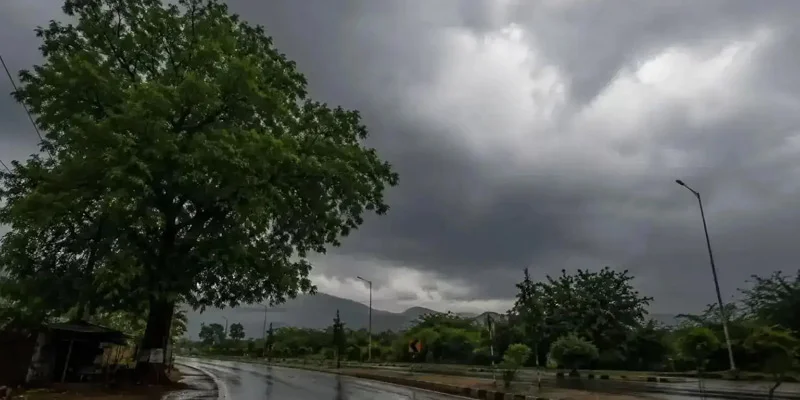
NEW DELHI: The monsoon’s sharpest spell is sitting over the northern mountains. The India Meteorological Department has kept a red alert in force for extremely heavy rain across parts of Himachal Pradesh — Chamba, Kangra, Mandi and Sirmaur among the districts named — and issued a red warning for Uttarakhand too, with flash floods, landslides and rockfalls the stated risks through July 20–21. On the plains, a gentler edge of the same system has put Delhi and its neighbours under a yellow alert for heavy showers and thunderstorms.
Officials have moved with the forecast rather than after it. Several Uttarakhand districts have shut schools for the day, disaster-response teams are pre-positioned in the vulnerable valleys, and hill highways are being watched for slips. The weather office expects the intensity to ease from July 22 as the system tracks on, but has advised residents, pilgrims and tourists on the mountain routes to travel with the alerts and avoid swollen streams and cut slopes until the peak passes.
Moving with the forecast: IMD’s red alert for Himachal and Uttarakhand runs through July 20–21, with a Delhi-NCR yellow alert — schools shut in parts and response teams pre-positioned before the peak.
The rain that fills a reservoir can corner a valley. Preparedness is measured in the hours between the warning and the water.
At a Glance
• Red alert: extremely heavy rain over parts of Himachal (Chamba, Kangra, Mandi, Sirmaur) and Uttarakhand
• Plains: Delhi-NCR yellow alert — heavy showers, thunder, gusty winds
• Response: schools shut in parts of Uttarakhand; disaster teams pre-positioned
• Outlook: intensity expected to ease from July 22 as the system moves
It is worth holding both truths at once. This is the rain that recharges reservoirs, wets the soil for the kharif sowing that feeds the country, and refills the aquifers a long summer drew down; a strong, well-spread monsoon is among the most welcome things that can happen to the economy. The task is to capture that benefit while blunting the sharp edge of the same weather — the sudden inundation of a hill town, the landslide across a highway, the swollen river downstream.
The constructive read is that India’s early-warning machinery has grown quietly more capable, and the way forward is to keep sharpening it. District-level, impact-based alerts, a warning chain that reaches the last village by phone and siren, response units stationed before the cloudburst rather than after, and steady investment in drainage, embankments and slope stabilisation together turn raw rainfall into managed risk. Handled with that seriousness, even the fiercest days of the monsoon stay what the season has always been for India — a resource to be harvested safely rather than a threat to be feared.