Blitz Bureau
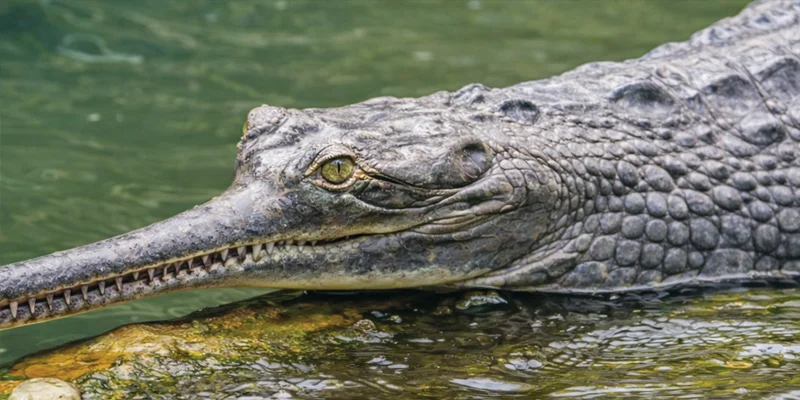
NEW DELHI: Once feared to have vanished from Assam’s river systems, the critically endangered gharial has been sighted once again in Kaziranga National Park, marking a remarkable and encouraging moment for wildlife conservation in the region, reported IANS.
The rare sighting has sparked hope among conservationists and wildlife experts, highlighting the success of ongoing efforts to restore and protect the state’s fragile riverine ecosystem.
Kaziranga National Park and Tiger Reserve (KNPTR) Director Sonali Ghosh said that on April 26, a gharial (Gavialis gangeticus) was spotted basking on a sand bar near the Maite anti-poaching camp area of Burapahar Range of the park.
Experts say that river confluences and sandy banks are the preferred habitat of gharials for feeding, basking, and breeding.
The sighting was reported by a team of forest staff while on patrolling duty along the confluence of Difolu and Brahmaputra rivers, she said. Experts say that river confluences and sandy banks are the preferred habitat of gharials for feeding, basking, and breeding.
She said that since then, more such sightings were reported with photographic proof from the same location in the following days. The last reported sighting was on May 8, from Burapahar Range by tourist guide Shishukanta Nath, which was widely welcomed on social media.
Assam Chief Minister’s Office (CMO), while taking to social media, posted: “Once believed to have disappeared from Assam’s river systems, the critically endangered gharial has now been spotted at Kaziranga, a truly remarkable moment for wildlife conservation.”
The gharial is a specialised, fish-eating reptile identifiable by its very long, thin snout. It is listed as critically endangered due to a historical 98 per cent population decline and an estimated 650-1,000 mature breeding individuals left in the wild, Ghosh said.
She informed that major remaining wild populations (gharial) and reintroduction sanctuaries are located near the National Chambal Sanctuary (Madhya Pradesh, Rajasthan, Uttar Pradesh), Katarniaghat Wildlife Sanctuary (Uttar Pradesh), and the Gandak River (Bihar).