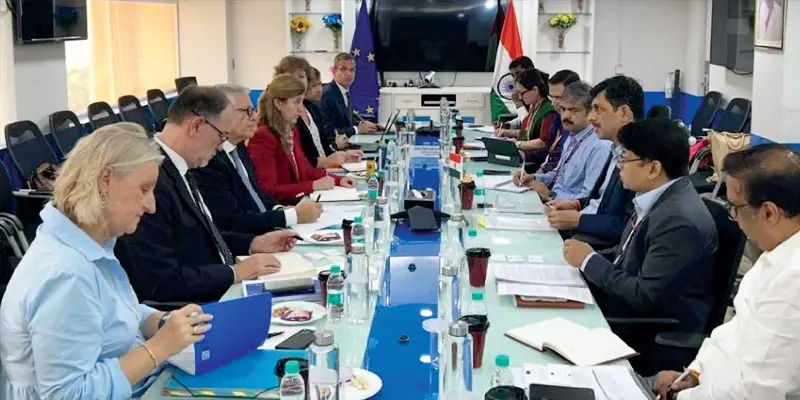
NEW DELHI: India and the European Union agreed to strengthen cooperation and facilitate continued dialogue on carbon markets, Carbon Border Adjustment Mechanism (CBAM)- related methodologies and opportunities for enhanced technical ties at a high-level meeting in New Delhi on October 12.
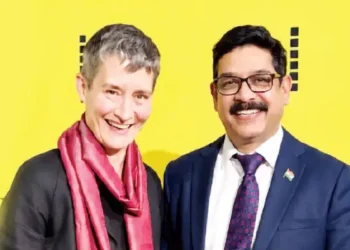
The Indian side was led by Power Secretary Pankaj Agarwal, and the EU team was headed by the European Commission’s DirectorGeneral for Taxation and Customs Union, Gerassimos Thomas.
The discussions focused on India’s carbon market development, the EU’s CBAM, and other areas of mutual interest, according to an official statement issued after the meeting.
Agarwal highlighted India’s progress under the Carbon Credit Trading Scheme (CCTS), including the notification of emission intensity reduction targets for 490 industrial units and the development of the domestic carbon market. He also underscored India’s progress in increasing the share of nonfossil sources in its electricity generation capacity, noting that non-fossil sources account for 308 GW of the country’s total installed capacity of 558 GW, the statement said.
The EU side appreciated India’s progress in developing its carbon market and shared developments relating to CBAM implementation. Both sides expressed willingness to continue technical engagement on recognition of carbon pricing mechanisms, monitoring, reporting and verification (MRV) systems, and capacity building, the statement added.
The discussions focused on India’s carbon market development, the EU’s CBAM, and other areas of mutual interest, according to an official statement issued after the meeting.
According to experts, while Western countries continue to focus on India’s coal-fired power plants in the debate on climate change, what is being overlooked is the rapid rate at which the country is adding to its renewable energy capacity, which includes both solar, hydel and wind power.
Steel and aluminium are among the hardest sectors to decarbonise. Indian exporters now face carbon border rules in key markets.
The Global Trade Research Initiative estimates that Indian steel and aluminium exporters may need to cut prices by 15 to 22 per cent to remain competitive in Europe. Smaller firms struggle the most with the cost of measuring and reporting emissions.