Blitz Bureau
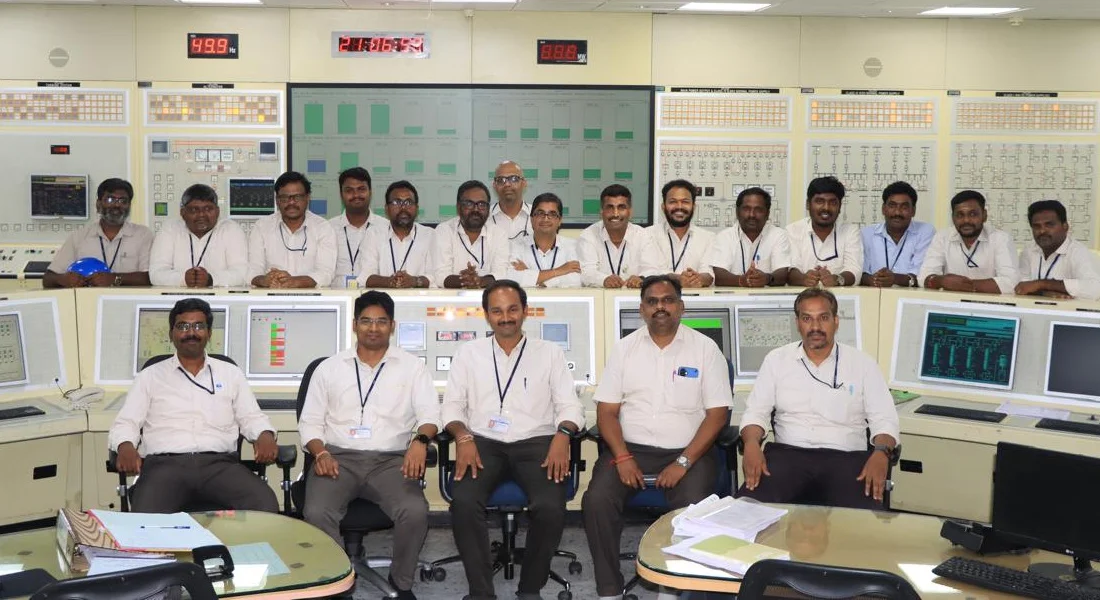
NEW DELHI: India has marked a major milestone in its nuclear energy programme with the indigenously designed and built Prototype Fast Breeder Reactor (PFBR) at Kalpakkam in Tamil Nadu successfully attaining its first criticality- the start of a controlled nuclear fission chain reaction- on April 6. This PFBR is a 500 MWe (MegaWatt electrical) reactor built by Bharatiya Nabhikiya Vidyut Nigam Limited (BHAVINI) at the Kalpakkam Nuclear Complex.
With this achievement, India has officially entered the second stage of its three-stage nuclear power programme, a vision first conceived by Homi Jehangir Bhabha, the architect of India’s nuclear programme. The milestone carries substantial global significance. Once fully operational, India will become only the second country in the world after Russia to operate a commercial fast breeder reactor.
This achievement marks a significant step in India’s clean energy journey, reinforcing the country’s commitment to reliable, low-carbon power. Additionally, it brings India closer to its goal of achieving net zero emissions by 2070, as announced by Prime Minister Narendra Modi.
The landmark was reached after meeting all stipulations set by the Atomic Energy Regulatory Board (AERB), which granted clearance following a detailed review of the plant’s safety systems.
The PFBR’s technology development and design were carried out indigenously by the Indira Gandhi Centre for Atomic Research, a research and development centre under the Department of Atomic Energy.
Fast breeder reactors form a key component of India’s long-term nuclear power strategy. Unlike conventional thermal reactors, the PFBR uses uranium-plutonium mixed oxide (MOX) fuel. Its core is surrounded by a blanket of uranium-238, where fast neutrons convert the fertile uranium into fissile plutonium-239, enabling the reactor to generate more fuel than it consumes.
The reactor is also designed to eventually use thorium-232 in the blanket. Through transmutation, thorium-232 can be converted into uranium-233, which will serve as fuel for the third stage of India’s nuclear power programme.
According to the DAE, this capability enhances the utilisation of nuclear fuel resources and allows India to extract significantly more energy from its limited uranium reserves while preparing for the future large-scale use of thorium.
UnderstandingCriticality
Criticality is the point at which a sustained and controlled nuclear fission chain reaction begins. At this stage, neutrons produced by fission equal those lost through absorption and leakage, resulting in a stable power output. It marks the transition from the construction phase to the operational phase and is the essential first step towards generating heat and, ultimately, electricity.