
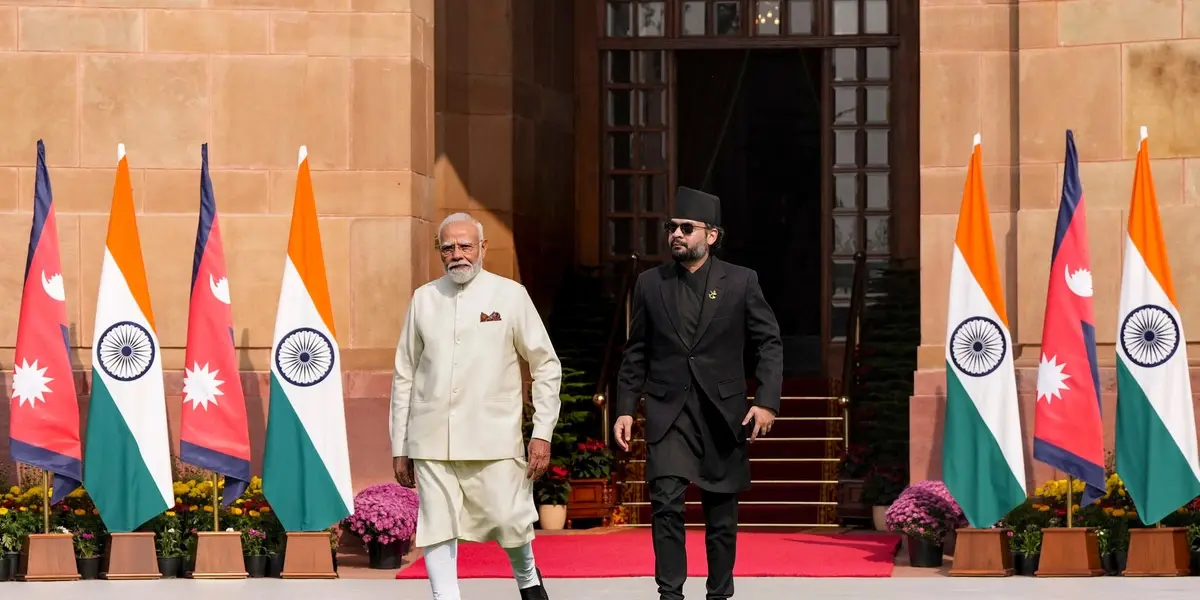
India and Nepal have announced a series of initiatives covering connectivity, energy, trade, education, healthcare and institutional cooperation during Nepalese Prime Minister Balendra Shah’s State visit to India.
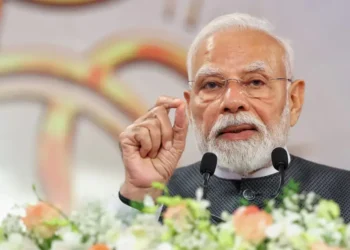
Prime Minister Narendra Modi and Shah held wideranging discussions on bilateral, regional and global issues on November 23. Later, in a joint press statement, Prime Minister Modi said India-Nepal relations are woven together by shared history, faith, culture and deep people-to-people ties. He also announced the Joint Vision Document adopted by the two nations.
The comprehensive 10-pillar Joint Vision titled ‘Viksit Bharat and Samunnat Nepal’, outlines an ambitious roadmap to modernise bilateral relations and strengthen cooperation across economic development, connectivity, energy, technology, education, sports, tourism, healthcare and agriculture.
India will extend development assistance worth ₹15,000 crore to Nepal, including grants for post-disaster reconstruction and infrastructure projects and a rupee-denominated line of credit for energy sector projects.
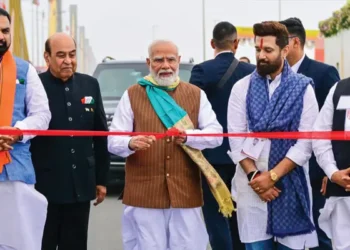
Among the major announcements is the launch of the Sarayu-Kamala Express rail service connecting Ayodhya in India with Janakpur in Nepal. The two sides also marked progress in cross-border infrastructure with the inauguration of a motorable bridge between Dharchula in India and Darchula in Nepal.
The foundation stone was laid for a new Integrated Check Post (ICP) at Banbasa, while construction of ICPs at Bhairahawa, Sunauli and Dodhara Chandani is progressing.
The foundation stone was laid for a new Integrated Check Post (ICP) at Banbasa, while construction of ICPs at Bhairahawa, Sunauli and Dodhara Chandani is progressing. These facilities are expected to strengthen cross-border movement and trade.
Cooperation in the energy sector also featured prominently. The foundation stone was laid for the 669 MW Lower Arun Hydroelectric Project. India and Nepal also marked the dedication of Phase II of the MotihariAmlekhgunj Oil Pipeline and the foundation stone laying for a petroleum terminal at Jhapa, part of the planned Siliguri-Jhapa petroleum pipeline. Under the development cooperation package of ₹15,000 crore, equivalent to NPR 24,000 crore, India will support Nepal’s reconstruction and long-term development priorities.
To facilitate Nepal’s transit trade, India has agreed to provide access to two additional ports — Deendayal Port at Kandla in Gujarat and Paradip Port in Odisha.
Other major announcements include the establishment of an Agro-Industrial Park in Chitwan and an offshore campus of the Indian Institute of Technology (IIT) in Nepal. The final location survey for the proposed electrified broad-gauge railway line between Raxaul and Kathmandu has also been finalised.