Blitz Bureau
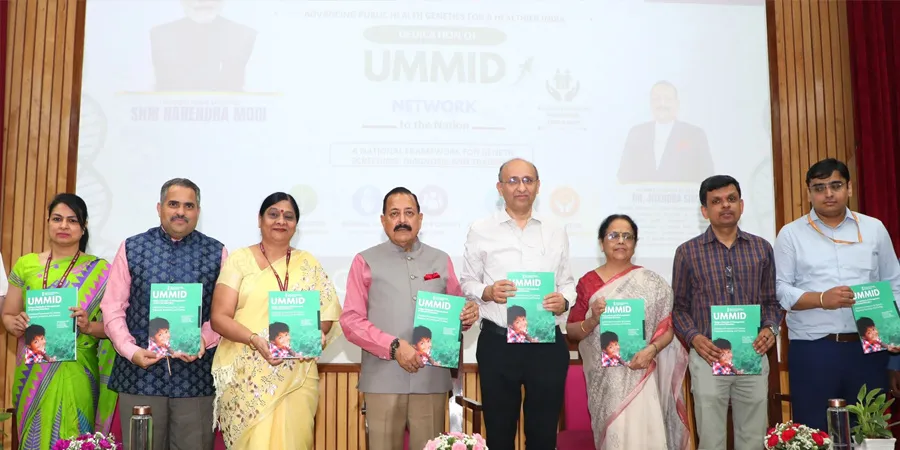
NEW DELHI: Aimed at making diagnosis and management of rare genetic disorders more affordable, accessible and widely available, UMMID (Unique Methods of Management of Inherited Disorders) Programme for Rare Genetic Disorders was dedicated to the nation on May 21.
Speaking at a special event organised by the Department of Biotechnology in New Delhi, Union Minister of State (Independent Charge) for Science & Technology said India is steadily moving towards an era where healthcare, diagnosis and treatment will become increasingly genome-based, precision-driven and tailored to the genetic profile of individual patients.
“The entire future of medicine is moving towards gene and genome-based individualised treatment,” he said.
The Union Minister also released the UMMID Compendium and launched the UMMID Dashboard, which will strengthen nationwide access to diagnostics, counselling, outreach and programme monitoring for inherited disorders.
Singh said inherited and rare genetic disorders had remained neglected for decades because diagnosis was often difficult, treatment inaccessible and medicines prohibitively expensive. He stressed the need for a coordinated national mechanism to support affected families through early detection, screening and genetic counselling.
Highlighting the government’s broader healthcare reforms under Prime Minister Narendra Modi, the Minister said the focus has remained on affordable, accessible and preventive healthcare through expanded wellness centres, wider insurance coverage and affordable medicines.
Calling inherited disorders a “silent but deeply challenging public health burden,” Singh said many families spend years searching for proper diagnosis and treatment. He added that India’s vast genetic diversity makes it necessary to create a robust ecosystem for newborn screening, prenatal counselling, genetic diagnostics and clinician training.
He further stated that the experience gained through UMMID would lay the foundation for future precision medicine, where treatment for diseases such as diabetes, cardiac ailments and cancer could increasingly be based on an individual’s genetic profile.
“Genetic medicine and nuclear medicine are emerging as two major frontiers that could redefine healthcare in the coming decades,” he said.