Blitz Bureau
NEW DELHI: The February framework did the easy half. What is left — the Bilateral Trade Agreement itself — is the half that decides whether Mission 500 is a target or a headline.
On 2 February 2026 the Prime Minister and the President of the United States announced a trade framework that cut American reciprocal tariffs on Indian goods to 18 per cent from 25, and set out an objective both capitals now call Mission 500: bilateral trade of $500 billion by 2030. Alongside it India signalled an intention to buy $500 billion of American energy products, aircraft and aircraft parts, precious metals, technology products and coking coal over five years. That second number is the one worth holding on to, because it is the one with arithmetic attached — $500 billion over five years is an average of $100 billion of purchases a year.
Six months on, the framework is intact and the agreement underneath it is not yet finished. The Commerce Secretary, Rajesh Agarwal, said on 13 August that India remains in regular touch with Washington on the proposed Bilateral Trade Agreement and that both sides are committed to the terms agreed in February. Negotiations continue on the remaining tariff barriers, on non-tariff and technical barriers to trade, and on customs and trade facilitation.
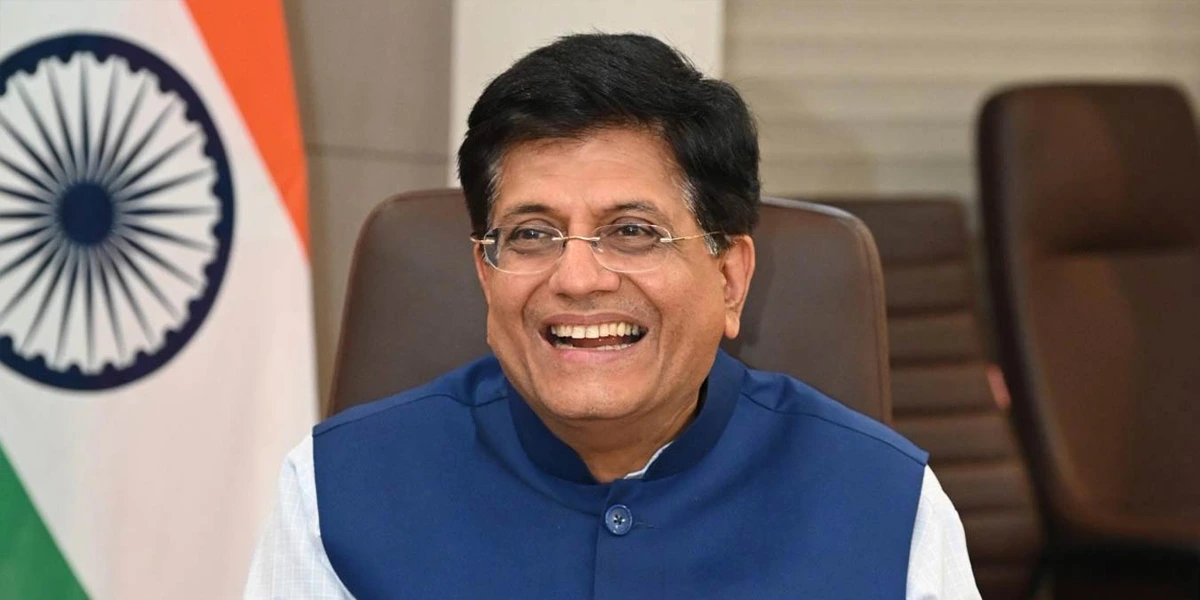
Leading the negotiation: Union Minister of Commerce and Industry Piyush Goyal, whose ministry runs the Bilateral Trade Agreement talks with Washington. He left for Singapore on 19 August for the fourth India-Singapore Ministerial Roundtable, a reminder that the American track is one of several running at once.
$500 billion of purchases over five years is $100 billion a year. India’s total merchandise and services exports to the whole world in 2025-26 were $860.09 billion. The scale of what has been promised is best understood against that.
At a Glance
• Framework announced: 2 February 2026
• US reciprocal tariff: cut to 18 per cent from 25 per cent
• Mission 500: $500 billion of bilateral trade by 2030
• Indian purchase intent: $500 billion of US goods over five years — about $100 billion a year
• Categories named: energy, aircraft and parts, precious metals, technology products, coking coal
• Status, 13 August 2026: BTA talks continuing; both sides committed to the February terms
• India’s total exports, 2025-26: $860.09 billion (merchandise and services)
For a reader who is not a trade negotiator, the practical question is what the unfinished half contains. Tariff lines are only the visible part. The categories still being worked through — non-tariff barriers, technical barriers to trade, customs and trade facilitation — are the ones that decide whether an Indian pharmaceutical consignment clears an American port in days or weeks, whether an engineering exporter’s certification is accepted without a second test, and whether a small Indian firm can sell into the United States without a compliance department. Those are the provisions that turn a headline tariff number into an order book.
There is a second reason the diaspora and the student population should watch this file. Trade agreements of this generation increasingly carry chapters on services, professional mobility and digital trade alongside goods. Nothing in the February framework has been published as settled on those points, and it would be wrong to assume them. But the negotiation is where they would be settled, which is why the pace of the talks matters to more people than the exporters.
The constructive reading is that both governments have kept the framework in place through a period of considerable turbulence in global tariff policy, and that officials on both sides are still meeting. The measurable milestone to watch for is not another announcement but a published text — a first-tranche agreement with schedules attached, so that an Indian firm can look up its own product line and know what it will pay. Until that document exists, Mission 500 is a direction of travel. Once it does, it becomes a plan.