Blitz Bureau
NEW DELHI: India has 165 working airports. The scheme notified last month is designed to add a hundred more and almost none of them will be built from scratch.
The Modified UDAN scheme, notified on 4 July 2026, runs for ten years from FY 2026-27 to FY 2035-36 with a total outlay of ₹28,840 crore — an average of about ₹2,884 crore a year. It targets 100 new airports developed from existing unserved airstrips and 200 modern helipads, alongside continued operational support for regional airports and viability-gap funding for airlines flying thin routes.
The word doing the work in that sentence is existing. India is dotted with airstrips built for defence, for state governments, for public-sector plants and for princely-era aviation, many of them paved and most of them idle. Reviving an airstrip is a different economic proposition from acquiring land and building a greenfield terminal: the runway alignment exists, the approach path is already clear of construction, and the cost falls to terminal, apron, navigation aids and firefighting. That is why a hundred airports can be contemplated on an outlay that would fund perhaps three or four large greenfield fields.
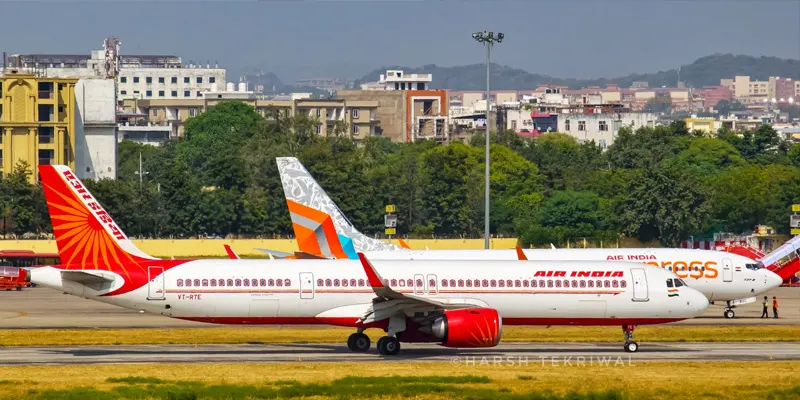
From 74 to 165 in twelve years. India’s operational airport count has more than doubled since 2014, and the country is now the world’s third-largest domestic aviation market. The next hundred fields are meant to come from airstrips that already exist.
The scheme is not really about aircraft. It is about what a two-hour flight does to a district that is presently fourteen hours from its own state capital.
At a Glance
• Scheme: Modified UDAN, notified 4 July 2026
• Period: FY 2026-27 to FY 2035-36, ten years
• Outlay: ₹28,840 crore — about ₹2,884 crore a year
• Targets: 100 airports from existing airstrips; 200 modern helipads
• Operational airports: 165 as on 15 July 2026, against 74 in 2014
• Position: India is the world’s third-largest domestic aviation market
• Also covered: viability-gap funding for airlines on underserved routes
Two hundred helipads deserve more attention than they will get. A helipad is not a small airport; it is a different category of infrastructure serving a different need. In the Himalayan states and the North-East, where road journeys are measured in days during the monsoon and in weeks after a landslide, a certified helipad is a medical-evacuation asset, a disaster-response asset and a tourism asset before it is ever a commuter link. The scheme funds the pad. Whether it also funds the sustained helicopter operations that make a pad useful is the question a district administration should be asking now, while the guidelines are still being written into state-level agreements.
For the traveller the practical guidance is straightforward. Routes under UDAN carry capped fares on a fixed number of seats per flight, with the shortfall met by viability-gap funding — so the concessional seats are finite and they go early. A passenger flying from a newly connected town should book against the scheme window rather than at the counter. And a district that wants to be in the next hundred should be preparing its case now: the airstrip’s ownership record, its runway condition survey, the obstruction survey of the approach funnel, and a credible catchment estimate. The airports in this scheme will go to the districts that have their paperwork ready, and that is a competition any district can enter.