Blitz India Business
NEW DELHI: The devastating flash floods on the Nepal-Tibet border should be a wakeup call for India – not simply because Himalayan disaster has claimed hundreds of lives, but because it shows how quickly a mountain catastrophe can become an economic crisis, destroying infrastructure, disrupting trade and hitting power generation. The latest disaster has already spilled across borders. Flooding in Nepal disrupted the India-Nepal trade route through Sonauli, while nearly 360 MW of Nepal’s hydropower capacity was reportedly damaged. India may now have to increase electricity supplies to a neighbour increasingly dependent on hydropower exports.
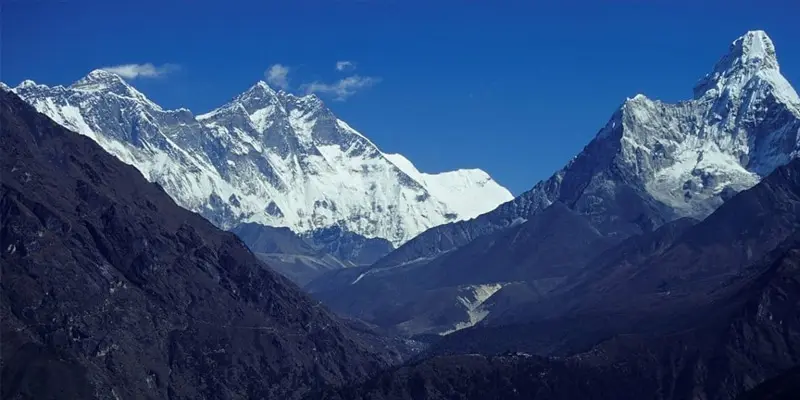
The Himalayas are no longer an environmental concern. They are a critical economic asset – and increasingly fragile. India’s Himalayan states are at the centre of an infrastructure push. Highways, tunnels, bridges, railways, hydropower projects, transmission lines, airports, hotels and pilgrimage infrastructure are being built across Uttarakhand, Himachal Pradesh, Jammu & Kashmir, Sikkim and Arunachal Pradesh.
Much of this investment is necessary. These states need connectivity, employment, electricity and tourism. But is India building wisely enough? The Himalayas are among the world’s most geologically unstable mountain systems. Climate change is adding further uncertainty through glacier retreat, unstable slopes, changing precipitation and glacial lake outburst floods. India is monitoring 2,485 glacial lakes across Himalayan river basins, 56 classified as very high risk. When a highway is washed away, tourism is disrupted, goods movement slows, communities are stranded and public finances face another reconstruction bill. Damage to hydropower projects means lost generation and revenue, and prolonged repairs.
The 2021 Rishi Ganga disaster in Uttarakhand demonstrated the danger. A flash flood destroyed hydropower infrastructure and killed more than 200 people. The 2023 Sikkim glacial lake outburst was another warning. Yet the development model has changed little. The problem is not development itself. It is development that fails to adequately price risk.
India needs to move from project-level environmental clearances towards landscapelevel risk assessments. A highway, dam, tunnel or town cannot be evaluated in isolation when all interact with the fragile watershed. That requires stronger geological surveys, carrying-capacity assessments, better drainage and slope engineering, glacier and river monitoring, early-warning systems and alternative transport routes. Every rupee spent on prevention can save several rupees in reconstruction.
What happens in the Himalayas does not stay there. The mountains feed India’s river systems, influence agriculture across the plains and support millions of livelihoods. Their instability can transmit shocks well beyond the mountains. India cannot choose between development and conservation. It must choose resilient development.
The next Himalayan infrastructure boom should, therefore, be judged not by how much India can build in the mountains, but by how much of what it builds can survive them. That is no longer an environmental question. It is an economic imperative.