
DEEPAK DWIVEDI
NEW DELHI: Saffron has become the predominant colour of India’s electoral map. The latest Assembly election results have reinforced a trend visible over the past more than a decade – the steady and all-round expansion of the Bharatiya Janata Party footprint under the leadership of Prime Minister Narendra Modi.
The party’s emphatic victories in West Bengal and Assam and its growing vote-share in southern states, have underscored that the saffron surge is here to stay, and for years to come. With an unparalleled organisational depth and ideological reach, the BJP has grown from a primarily Hindi-heartland party into a pan-India political force.
Today, the BJP, along with its allies, is in power in 21 states and Union Territories, covering over 70 per cent of the country’s population.
The party’s most recent – and prized – possession has been the eastern state of West Bengal, which had long been viewed as one of its toughest ideological and electoral barriers.
BJP a formidable force pan-India
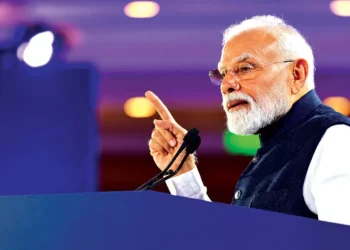
The results have also strengthened the perception that PM Modi remains the single-most influential political figure in the country and that the BJP is strongly positioned for the next Lok Sabha poll battle. Far from slowing down after more than a decade in power, the BJP now appears to be constructing a political order that could endure well beyond 2029. The results underline how politics in the country is increasingly revolving around PM Modi, rather than regional satraps, caste coalitions or local identities. In states such as Haryana, Assam, Odisha, and now West Bengal, the BJP has successfully fought elections as a national movement centred on PM Modi’s leadership, welfare delivery, nationalism and Hindu-identity politics.
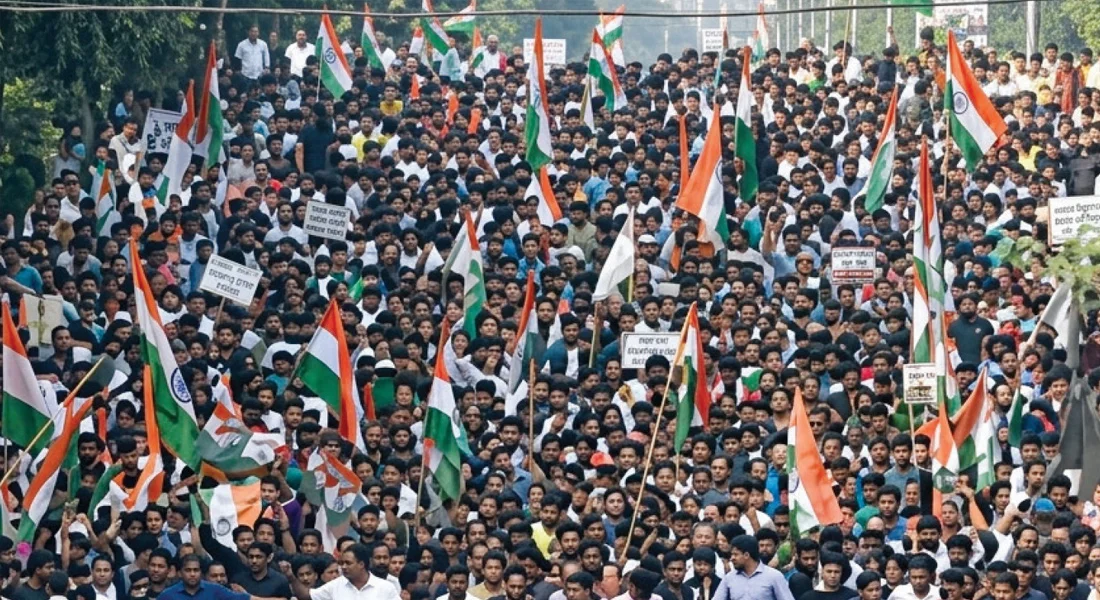
The results have strengthened the perception that PM Modi remains the single-most influential political figure in the country and that the BJP is strongly positioned for the next Lok Sabha poll battle
A key pillar of the party’s successes has been welfare politics. The Centre’s free ration schemes, direct benefit transfers, housing programmes, health insurance and large-scale infrastructure projects have created a direct emotional and political connection between voters and the Prime Minister.
One of the most decisive factors behind the BJP’s sustained electoral success has been PM Modi’s careful nurturing of a powerful women’s constituency across urban and rural India. Over the past decade, the party has created a direct political and emotional connect with women voters through welfare-driven governance, and lately the women’s reservation legislation.
PM Modi’s messaging has consistently projected women not merely as beneficiaries but as stakeholders in nation-building, giving rise to a silent yet formidable women voter base that has increasingly voted independently of traditional caste and community calculations.
At the same time, the BJP has steadily weakened many regional parties that once acted as barriers to its expansion – including the Shiv Sena, the NCP, the BJD, and the Akali Dal — while the Congress and the Left continue to shrink across large parts of India. Facing persistent BJP onslaught, the Opposition remains fragmented and incapable of offering a coherent national alternative.
The broader message from the latest political churn is loud and clear: it is no longer about merely winning elections; it’s about the emergence of a new political era dominated by the BJP’s robust organisational machinery and PM Modi’s personal, charismatic appeal.