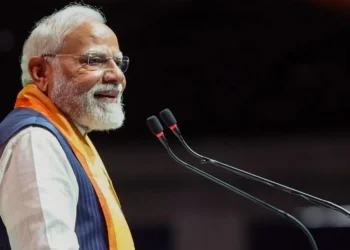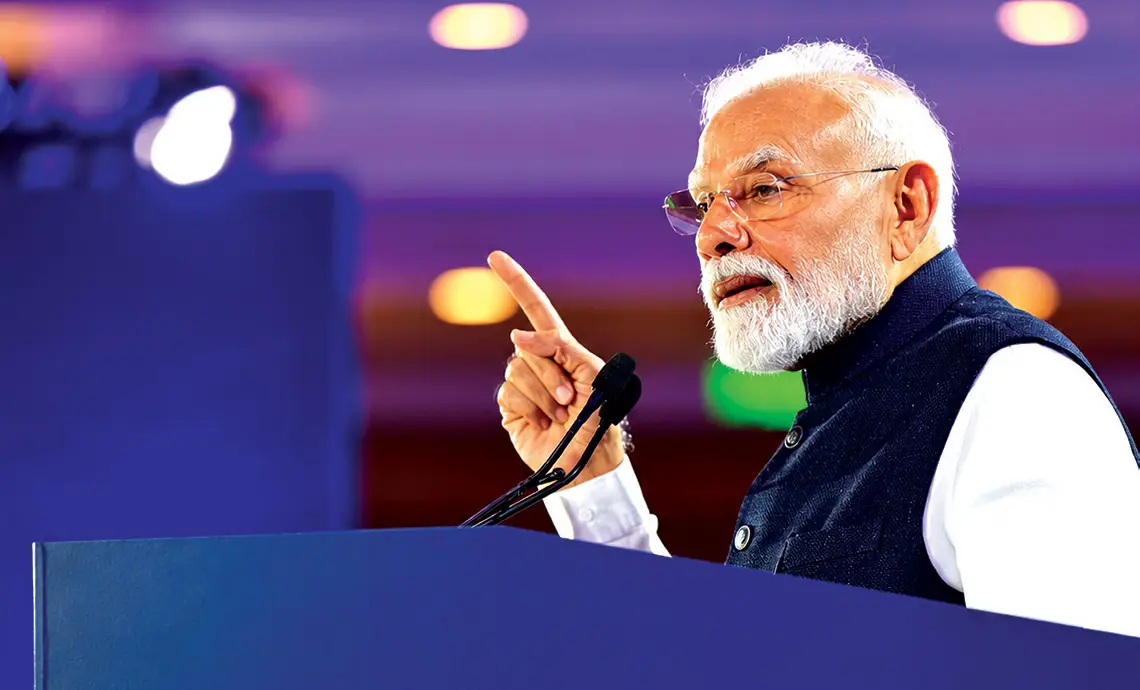
NEW DELHI: Every era, Prime Minister Narendra Modi told a room of more than 500 political and business leaders in New Delhi, has had its own definition of power. In this one, technology is power, data is power, and knowledge is power. “The real question is not who possesses power, rather the question is how that power is being used,” he said.
His answer came in three words: Power to Empower.
The occasion was the Bloomberg New Economy Forum, meeting in India for the first time, from October 13 to 15. Its organisers set the theme as ‘A World in Play: Defining the New Levers of Power’. The Prime Minister spent most of his address turning that theme round to ask what power is for.
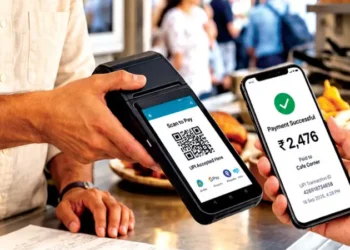
The Prime Minister made the case through India example, rather than in theory. Cheap mobile data, he said, turned connectivity from a privilege into an opening: the student in a small town now learns online, and a street vendor uses the same digital payments system as a car showroom.
Speaking statistics
The figures came next. India had a few hundred startups before 2014 and has more than 2,50,000 today. Nearly half are in small cities and towns, and more than 45 per cent have at least one woman as Director or partner. Renewable power capacity has gone from about 75 gigawatts in 2014 to about 300, four times as much. The target of 40 per cent non-fossil electricity capacity, set for 2030, was reached in November 2021, and India was the first G20 country to get there.
We do not grow at anyone’s cost. We grow with the world, and for the world -Prime Minister Narendra Modi
Then he turned the test outward. Vaccines to more than 100 countries. CoWIN, built as open source. Digital public infrastructure shared with partner nations. One of every five generic medicines in the world. And zero, the oldest example in the speech: India gave it to the world, he said, and “never asked for royalties in return”.
The sharpest passage was about the present. Supply chains, energy, minerals, payment systems and technology, he said, “are increasingly becoming instruments of pressure and dominance”, and many of the routes globalisation opened have become chokepoints. The commodity in shortest supply is trust. That is where he placed India. “We do not grow at anyone’s cost. We grow with the world, and for the world.”
By the next morning his ministers were using it. On a panel with Canada’s Foreign Minister Anita Anand, former Australian Prime Minister Kevin Rudd and former UK Prime Minister Rishi Sunak, External Affairs Minister S Jaishankar turned down the label ‘middle power’ for a country that is the world’s most populous and close to a $4 trillion economy.
Powers in middle
“More than a middle power, in a way, we are powers in the middle,” he said. What defines such a power? “To use the Prime Minister’s words, the countries who have the power to empower,” he said.
Electronics and IT Minister Ashwini Vaishnaw, on stage with Cisco chief executive Chuck Robbins, described an India that now makes every component for many of the products it needs, having worked back from the finished product to modules, then components, then materials, then the machines that make them.
What India gained is the agenda. Three days in front of central bankers, sovereign investors and the heads of some of the world’s largest companies, India did not wait to be asked about its prospects; it told the room what power should be for.