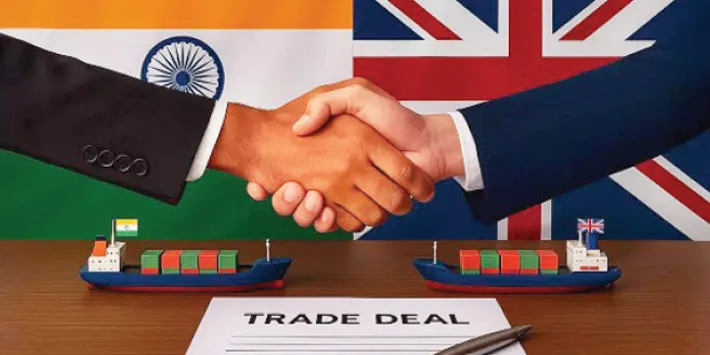
On July 15 the India–UK Comprehensive Economic and Trade Agreement takes effect, opening duty-free access for close to 99% of India’s exports to Britain. A companion social-security pact — the Double Contribution Convention — comes into force the same day, sparing Indian professionals on short UK postings from paying into two systems at once, with the exemption window widened from three years to five.
With the customs tariff and rules-of-origin regulations now notified, exporters who meet the origin conditions can claim zero tariffs from day one. The gains concentrate in labour-intensive and engineering lines — textiles, leather and footwear, marine products, gems and jewellery, sports goods and toys, alongside engineering goods and auto components — as UK tariffs of up to 70% on some processed foods, 21.5% on marine products, 18% on engineering and auto parts, 16% on leather and footwear, 12% on textiles and 8% on chemicals and pharmaceuticals fall away.
Ready to ship: Duty-free access for nearly all of India’s exports to the UK begins July 15.
A trade deal only pays if exporters can use it — the rules of origin are the fine print that turns a headline tariff cut into an actual zero-duty shipment.
- Live: CETA + Double Contribution Convention from July 15
- Coverage: Duty-free for ~99% of India’s exports to the UK
- Winners: : Textiles, leather, marine, gems, engineering, auto parts
- The catch: Certificates of origin; minor processing won’t qualify
Cumulation lets inputs from one partner count as originating in the other, helping integrated supply chains, while simple repackaging or relabelling is barred from conferring duty-free status. For Indian firms, the deal — signed in London last July after 14 rounds — is both a market opening and a documentation test that rewards preparation.
The constructive priority is readiness: helping small firms secure origin certification, meet British standards and scale capacity, so week one’s duty-free promise becomes a durable, growing order book.