Blitz Bureau
NEW DELHI: In 1879, Professor Max Muller carried the Ishavasya Upanishad to the West, publishing its first English translation through Oxford University Press as the opening volume of the ‘Sacred Books of the East’. Nearly a century and a half later, an Indian philosopher has arrived at the same university to return the text to its living meaning, reported IANS.
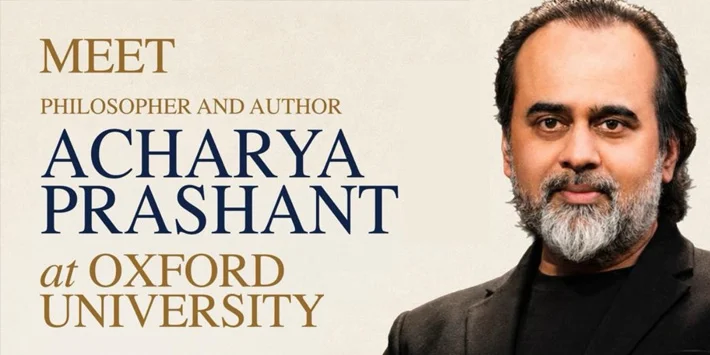
Muller was himself Oxford’s first Professor of Comparative Philology, and the entire Sacred Books of the East series was prepared under his supervision. On June 8, at the lecture theatre in Oxford University’s Manor Road Building, Acharya Prashant delivered a detailed philosophical session on the second verse of the Isha Upanishad.
Earlier that day, Oxford students took Acharya Prashant on an extensive tour of the campus, visiting the historic New College and Somerville College, among several other sites. Standing before the Oxford University Press building, he told IANS, “Max Muller did a remarkable job in bringing this text to the West. But words have to be brought to life, and life is this moment. I have come to set out the relevance the Upanishad holds for the world as it is today.”
The Manor Road Building, where the session was held, houses Oxford University’s Department of Economics and has hosted the prestigious Atkinson Memorial Lecture, at which some of the world’s leading thinkers, among them Nobel laureates, have spoken in recent years on economics, technology, artificial intelligence and climate change.
In the very building where economics and policy are taught, Acharya Prashant argued, from the standpoint of Vedanta, that economics, technology and policy alone cannot resolve the crisis until the consuming individual turns to examine the self.
Speaking to the media, Acharya Prashant framed his message as a broad warning. The West, he said, has achieved extraordinary things in the external world, from exploring the universe to splitting the atom to uncovering the secrets of the body. Yet, humanity now finds itself in the midst of the sixth mass extinction, a crisis entirely of its own making.
The very tools, technology and economic prosperity in which we take pride, he said, are now being put to the service of destruction. Without self-knowledge and a massbased education of the self, he argued, the prospect of any redemption is slim, and the same applies equally to the environmental crisis, sectarianism, international divisions, the threat of nuclear war and the mental health epidemic.
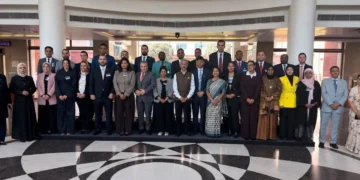
The session drew a varied audience, including Oxford students and research scholars from the UK, Europe and the United States.