Blitz Bureau
Conservatives have won seven major presidential elections in Latin America in the past few years, most of them since the January 2025 inauguration of the US President Donald Trump, in a winning streak propelled by concerns over crime, immigration and slow economic growth.
Peru
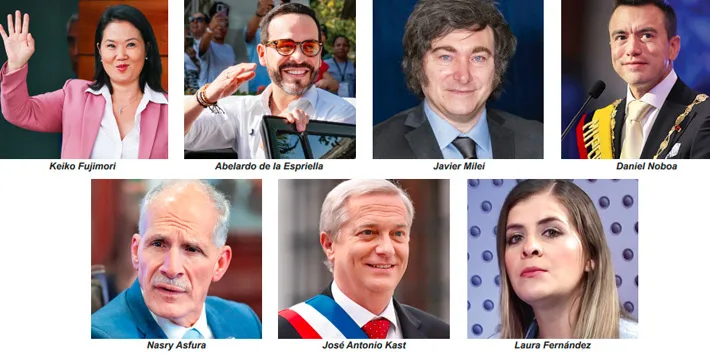
Keiko Fujimori, a businessfriendly conservative politician who campaigned on a tough-oncrime platform, on July 4 was declared the winner of Peru’s presidential runoႇ election, making the South American nation the latest in Latin America to elect a right-wing leader.
Fujimori, 51, whose government defeated the Shining Path violent extremist group in the 1990s but also took an authoritarian turn, has pledged an aggressive crackdown on crime.
Colombia
Trump-endorsed outsider Abelardo de la Espriella won Colombia’s presidential election in June by a narrow margin, defeating progressive lawmaker Iván Cepeda. De la Espriella, nicknamed “The Tiger,” campaigned on a tough-oncrime approach, which includes proposals like canceling peace talks with Colombian rebel groups and building mega-prisons, like those in El Salvador. Colombia was governed for the past four years by a former member of a rebel group, who was critical of ithe Trump administration’s immigration and antidrug policies.
Argentina
Javier Milei, an economist and television commentator nicknamed “The Lion,” won Argentina’s presidential election in November 2023 by promising to slash government spending and tackle the South American nation’s decades-long inÀation problem. During his tenure, Milei has cut government spending by firing civil servants and halting investment in public infrastructure programs, while reducing subsidies for public utility bills.
Ecuador
Daniel Noboa, a member of one of Ecuador’s wealthiest families, was reelected to a four-year term in April 2025, winning the election with 56 per cent of the vote. The conservative leader has given the military a more prominent role in providing security in coastal cities overrun by drug gangs fighting over the control of ports and drug traႈcking routes.
Honduras
Nasry Asfura, a real estate investor and former city mayor of the National Party, narrowly won the presidential election in Honduras in November, defeating his closest rival by less than a percentage point. Asfura, who belongs to the same party as former President Juan Orlando Hernández who was pardoned by Trump for a drug traႈcking conviction, was endorsed by the US president, who threatened to cut oႇ aid to the small Central American country if Asfura was not elected.
Chile
In December, José Antonio Kast, a conservative and a devout Catholic, won Chile’s presidential election, defeating a progressive government that had been in power for the previous four years. In his campaigns, Kast capitalized on fears over increasing crime rates in Chile and said he would expel migrants from countries like Venezuela and Haiti that had been working in Chile without residency permits. Costa Rica
aura Fernández, an economy minister under conservative exPresident Rodrigo Chaves, won Costa Rica’s election in February, defeating her closest rival by 15 percentage points. During her campaign, Fernández proposed toughon-crime measures and said she would build a mega prison modeled after El Salvador’s notorious CECOT penitentiary.