Blitz Bureau
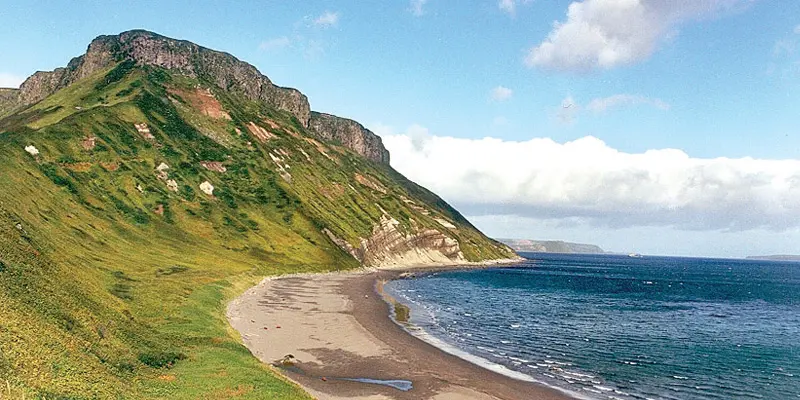
NEW DELHI: A diplomatic row has erupted over Russian President Vladimir Putin’s visit on August 14 to the Kuril Islands, a Moscow-controlled Paci¿c archipelago that also is claimed by Japan. Japan asserts territorial rights to the four southernmost islands of the chain, which it calls the Northern Territories.
The Soviet Union took them from Japan in the ¿nal days of World War II, and the dispute kept the countries from signing a peace treaty formally ending their hostilities.
Decades of diplomatic eႇorts to negotiate a settlement haven’t produced any visible results. Moscow over the years has also bolstered its military presence on the Kurils in moves that appeared to underscore its ¿rm stance in the dispute. Japanese Foreign Minister Toshimitsu Motegi said his country “strongly protests” Putin’s visit to Iturup, which Japan calls Etorofu.
“The Northern Territories, including Etorofu (Iturup) Island, are Japan’s inherent territory both historically and from the perspective of international law,” Motegi said in a statement. Japan’s Prime Minister Sanae Takaichi said Putin’s visit is “incompatible with the Japanese position on the Northern Territories” and is “absolutely unacceptable.”
One of the reasons Japan has made the eႇort to maintain ties with Russia is to allow former Japanese residents to return to the islands and pay tribute at their graves as a humanitarian consideration. Dmitry Medvedev, Russia’s former president and prime minister who now serves as deputy chair of the country’s Security Council, responded on X by saying, “Kuril Islands “were, are, and will remain Russian land.”
Energy at stake
The Soviet Union seized the four islands in the war’s ¿nal days, and the missing peace treaty has been Tokyo and Moscow’s un- ¿nished business for eighty years. What is new is the energy math surrounding it. Sakhalin-2, the LNG project sitting directly across the strait from where Putin stood, supplied Japan roughly 3.6–3.9 million tonnes last year — about 9% of its total LNG imports, and enough to make Japan the project’s largest single buyer.