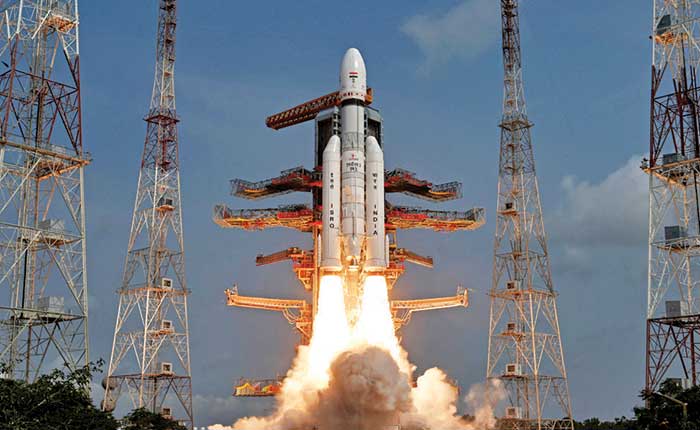
 IN a remarkable start to the year 2024, ISRO Chairman Shri S. Somanath unveiled an ambitious agenda, targeting a minimum of 12 launches. Demonstrating this commitment, ISRO achieved the successful launch of the X-ray Polarimeter Satellite (XPoSat) on January 1, marking the beginning of the year. Further solidifying its accomplishments, on January 6, ISRO flawlessly positioned India’s inaugural space-based solar observatory, the Aditya-L1 satellite into its designated orbit at Earth-Sun Lagrange point 1.
Benefits of data
The meteorological data obtained from INSAT-3DS will be used by the India Meteorological Department (IMD). The data will also be collected by laboratories working under the Ministry of Earth Sciences such as National Centre for Medium Range Weather Forecasting (NCMRWF),
Indian Institute of Tropical Meteorology (IITM), National Institute of Ocean Technology (NIOT) and Indian National Centre for Ocean Information Services (INCOIS). They will use the data for weather related research and services. The data obtained from this satellite will mainly be used to obtain information about India’s weather and climate forecast. Apart from this, the data will also prove helpful in issuing timely warnings and advance information and advisories to the general public, fishermen and farmers.
Meteorological wisdom
India boasts a profound legacy of meteorological observations and weather prediction, dating back to ancient times. The classic work ‘Brihatsamhita’, authored by Varahamihira around 500 AD, stands as evidence of the extensive knowledge and understanding of atmospheric processes during that era. The text emphasises the importance of adequate rainfall for agricultural prosperity. Another ancient masterpiece, ‘Arthashastra’ by Kautilya, meticulously documents scientific rainfall measurements and their applications in revenue and relief efforts.
Even the revered poet Kalidasa, in the seventh century, referenced the monsoon’s onset and path over central India in his epic ‘Meghdoot’. The formal establishment of meteorology as a scientific discipline occurred in the 17th century, marked by the invention of the thermometer and barometer, alongside the formulation of laws governing atmospheric gases.
Met observatories
India has been home to some of the world’s oldest meteorological observatories. The British East India Company founded such facilities in Calcutta and Madras to study the nation’s weather and climate. The Asiatic Society of Bengal, founded in 1784 in Calcutta (now Kolkata), played a crucial role in advancing scientific studies in Indian meteorology. In response to the calamitous tropical cyclone of 1864 in Calcutta and subsequent monsoon failures, the Indian Government established the India Meteorological Department (IMD) in 1875. Initially headquartered in Calcutta, IMD later moved to Shimla, Poona (now Pune), and finally to New Delhi.
Since its inception, the IMD has continually advanced its infrastructure for meteorological observations, communications, forecasting, and weather services, utilising contemporary technology. During the telegraph era, IMD pioneered the use of weather telegrams for collecting observational data and disseminating warnings. As technology evolved, IMD became the first organisation in India to employ a message-switching computer for global data exchange in the computer age. Further contributing to relentless weather monitoring and forecasting, the Indian Space Research Organisation (ISRO) has played a pivotal role. Leveraging ISRO’s research and development prowess, India became the first developing country to have its own geostationary satellite (INSAT), primarily designed for weather monitoring and cyclone warnings.
Advance research
The benefits derived from the data acquired through INSAT-3DS will be crucial for advancing meteorological research and services. The primary recipient of this valuable meteorological data is the India Meteorological Department (IMD). Additionally, laboratories operating under the Ministry of Earth Sciences will leverage this data for weather-related research and services.
Beyond this, the information derived from INSAT-3DS will play a pivotal role in issuing timely warnings, as well as providing advance information and advisories. In essence, the data collected from INSAT-3DS is poised to significantly enhance our ability to monitor, understand and communicate critical meteorological information for the benefit of various sectors and the public at large.