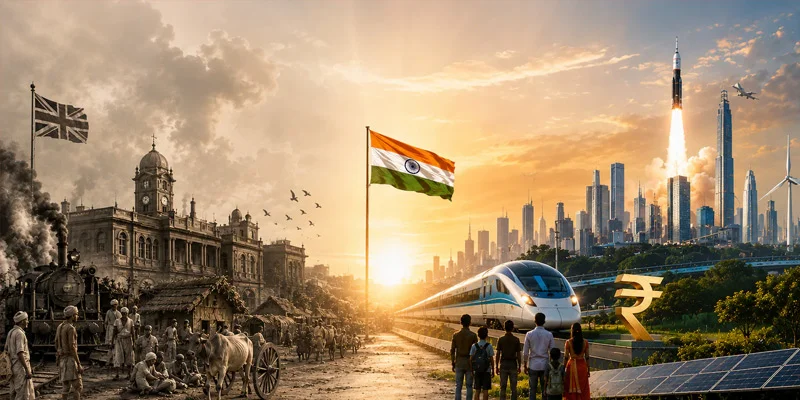
An emboldened India celebrated its 80th Independence Day with renewed con¿dence, and justi¿ably so. It is now the world’s fastest-growing major economy, a signi¿cant manufacturing and services hub, a digital power and an increasingly inÀuential voice in global aႇairs. Yet, political sovereignty does not automatically translate into economic sovereignty. In several strategic areas, India remains heavily dependent on the outside world.
This is the un¿nished business of Independence. Energy is the most obvious vulnerability. India imports a large share of its crude oil needs, leaving the economy exposed to geopolitical conÀicts, shipping disruptions and volatile global prices. The lesson from every crisis in West Asia is the same: energy security is national security. India must accelerate the transition to renewables, nuclear power, storage and alternative fuels while strengthening the resilience of its oil and gas supply chains.
The same vulnerability exists in technology. India has built an impressive digital economy, but much of the hardware that powers it – from semiconductors and advanced electronics to critical components – still depends on global supply chains.
The pandemic, the US-China rivalry and disruptions in semiconductor supplies have demonstrated how quickly such dependence can become an economic liability. Critical minerals pose an even bigger challenge. Lithium, cobalt, nickel and rare earth elements are essential for electric vehicles, batteries, renewable energy and advanced electronics. Overseas mineral partnerships, recycling, domestic exploration and strategic stockpiles, therefore, deserve as much attention as production-linked incentives.
Political sovereignty does not automatically translate into economic sovereignty
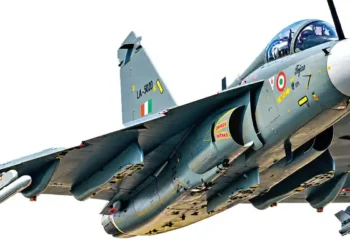
Defence is another frontier. India has made considerable progress in indigenous defence production, but imports remain signi¿cant, particularly for sophisticated platforms and critical technologies. The objective should not be self-suႈciency; it should be the capacity to withstand external shocks without compromising national security. This is where Atmanirbharta needs careful de¿nition. Self-reliance should not become an excuse for protectionism, ineႈcient domestic production or permanently shielding uncompetitive companies from foreign competition. India learnt the costs of excessive import substitution during the licence-permit era.
The lesson is clear: strategic autonomy must go hand in hand with global competitiveness, innovation, productivity and open markets that expose Indian ¿rms to healthy competitive pressures.
The better model is strategic resilience: build domestic capabilities where dependence creates national vulnerability, while remaining deeply integrated with global markets elsewhere. India should seek to become a competitive producer and exporter, not simply a country that replaces imports with more expensive domestic products.
The next phase of economic independence must, therefore, be about capability – world-class manufacturing, research, skills, infrastructure and globally competitive Indian companies. It must also mean diversi¿ed supply chains and the ability to negotiate with the world from a position of strength. Political freedom gave India the right to determine its own destiny. Economic strength will determine how much freedom it actually has to exercise that right.