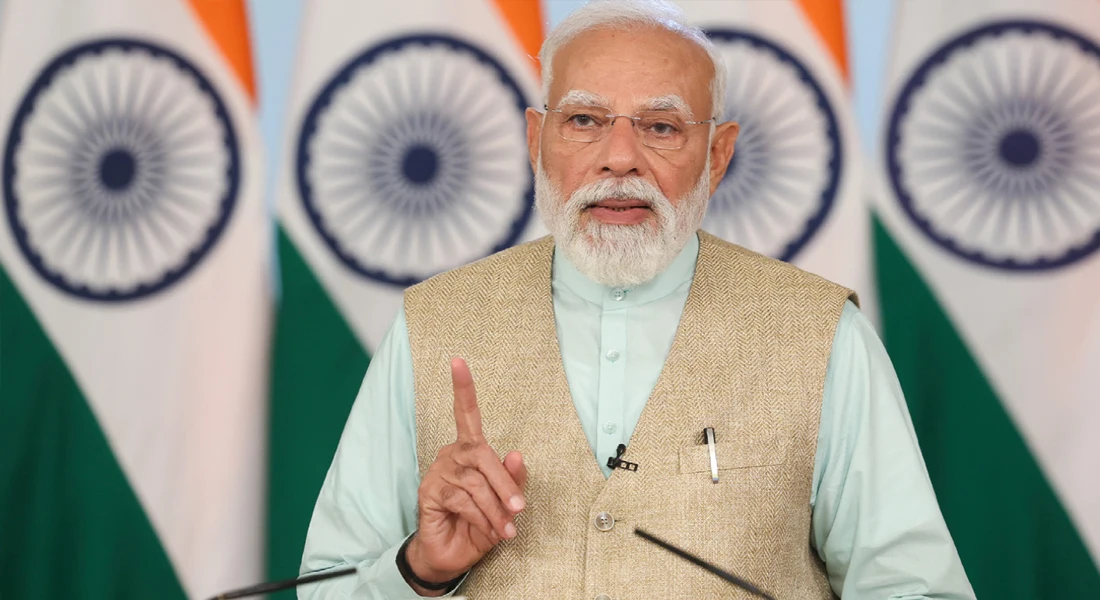
ndia and New Zealand closed a landmark day in Auckland by elevating ties to a Strategic Partnership and adopting a “Roadmap to 2030,” giving structure to a relationship that Prime Minister Narendra Modi said rests on “deep strategic trust.” The visit — the first by an Indian prime minister in four decades — capped a six-day Indo-Pacific tour that also took in Indonesia and Australia.
The substance leaned notably toward the sea. The two sides agreed a framework for maritime cooperation in the Indo-Pacific and to establish an annual Maritime Security Dialogue, with India welcoming New Zealand’s choice of Maritime Security as its priority pillar under the Indo-Pacific Oceans Initiative. Three defence arrangements underpin it: a Maritime Cooperation Arrangement between India’s Ministry of Defence and the New Zealand Defence Force, a hydrography and nautical-cartography arrangement for jointly producing navigational charts, and a Mutual Logistics Support Arrangement letting the two navies draw on each other’s facilities during approved activities.
The roadmap’s value is that it turns a warm visit into a calendar — annual dialogues and standing arrangements that keep working long after the delegations fly home.
At a Glance
- Upgrade: Strategic Partnership + “Roadmap to 2030”
- Outcomes: 18 — maritime security, trade, counter-terrorism, agriculture, tourism, education, research, sport, culture
- Maritime: Indo-Pacific framework; annual Maritime Security Dialogue
- Defence pacts: Maritime Cooperation, hydrography, Mutual Logistics Support
Commerce ran alongside security: the leaders set a goal of doubling two-way trade in goods and services to around ₹35,000 crore by 2030 and reviewed a free-trade agreement still under negotiation. The Auckland outcomes join a fast-widening map — the UK pact live July 15, an interim US deal in its final stretch and a concluded India–EU agreement heading toward signature.
The constructive task now is to make the architecture live: convene the first Maritime Security Dialogue, staff the defence arrangements, and close the trade talks on terms that work for both sides. Handled with patience, a historic first visit becomes a standing partnership rather than a single day’s headlines.