DEEPSEE DWIVEDI
LONDON : The Commonwealth Secretariat and the World Green Economy Organization (WGEO) have launched a joint initiative to reform the governance of critical minerals, as developing nations demand a fairer share of the economic benefits from the global energy transition.
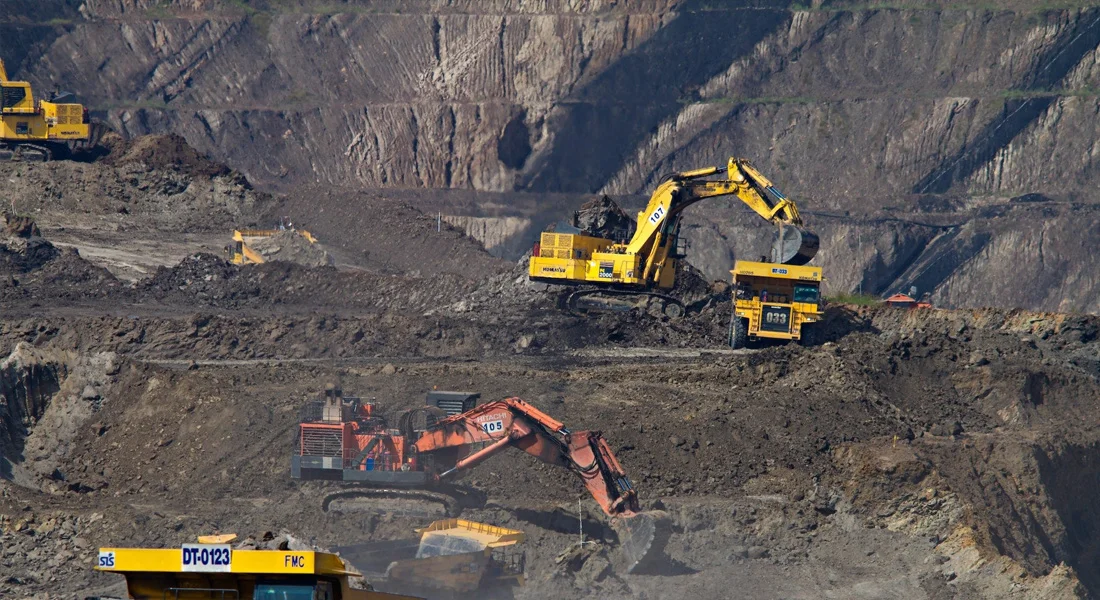
At a high-level dialogue in London during London Climate Action Week, policymakers and mining executives warned that the shift toward electric vehicles and renewable energy storage requires a fundamental restructuring of how transition metals like lithium, cobalt, and copper are extracted.
Discussions focused heavily on avoiding a repetition of past extractive cycles, which often left resource-rich developing nations dealing with severe environmental degradation and minimal domestic wealth. Delegates argued that for the transition to remain politically and economically viable, international mining companies must navigate a changing regulatory landscape where host governments enforce stricter legal frameworks and transparent fiscal terms.
Stronger partnerships between governments, industry, financial institutions, and development partners will be required to unlock financing, scale technology deployment, and support local economic participation, according to the event’s framework brief.
A central focus of the new strategy is the implementation of international benchmarks to evaluate mining projects before operations begin. The Commonwealth Secretariat highlighted its recently published “Model Mining Feasibility Study Guidelines” and a companion framework, “Understanding Mining Feasibility Studies” , designed to give governments the technical capacity to audit commercial contracts, environmental protections, and community benefits.
Key Facilitation Role
The event’s agenda was managed by Suresh Yadav, Senior Director of the Climate Change and Oceans Directorate at the Commonwealth Secretariat. Serving as a primary facilitator, Mr. Yadav delivered the opening welcome remarks and subsequently moderated the central executive roundtable. His role focused on driving consensus among divergent stakeholders on how to transform raw mineral wealth into domestic green industrialization.
The panel discussion brought together key institutional figures, including Dr. Arunabha Ghosh, chief executive of the Council on Energy, Environment and Water (CEEW); Naadira Ogeer, head of energy and natural resources at the Commonwealth Secretariat; and John Lindberg, senior policy manager at the International Council on Mining and Metals (ICMM). They were joined by Dr. Ekpen Omonbude, senior policy advisor for the Inter-Governmental Forum on Mining (IGF), and Bilal Qureshi of the International Trade Centre (ITC).
Operational Implementation
To move the initiative beyond policy discussions, the organizations highlighted two operational platforms. The Commonwealth Critical Minerals Alliance (CCMA) will serve as an intra-governmental mechanism to help member states standardize mining governance and accelerate regulatory action.
WGEO introduced its WETEX platform as a vehicle to connect resource-endowed nations with international green business networks, clean technology providers, and institutional capital.
The joint initiative comes as competition for critical minerals intensifies globally, with major economies moving swiftly to secure supply chains. The consensus from the London meetings indicates that access to these essential commodities will increasingly depend on standardizing project-level governance and ensuring visible, long-term economic development for local communities.