NEW DELHI: For decades, rural sanitation remained a persistent development concern nationwide. Sanitation coverage stood at 39 per cent when the Swachh Bharat Mission (SBM) began in 2014. By 2019, rural India had achieved 100 per cent sanitation coverage. More than 10.28 crore toilets were constructed across 36 states and Union Territories between 2014 and 2019. Rural India was subsequently declared Open Defecation Free (ODF) in 2019.
This achievement transformed the nature of India’s sanitation landscape. The focus shifted from an emphasis on household toilet access to a broader concern with the sustainability of sanitation practices and the management of waste at the village level.
It became the focus of Swachh Bharat Mission-Gramin Phase II that focuses on sustaining ODF status and strengthening solid and liquid waste management systems.
Impact in villages
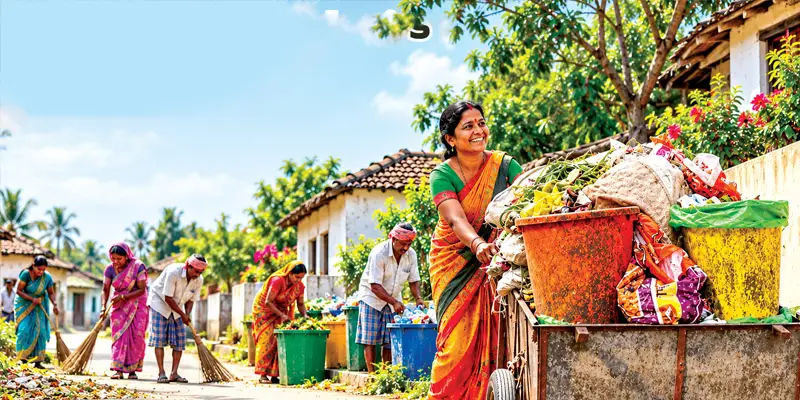
The impact of this focus is now visible in villages. An ODF Plus village not only sustains ODF status but also effectively manages solid and liquid waste, while maintaining visual cleanliness. Along with sustaining ODF Plus village status, these villages are classified into three progressive stages: Aspiring, Rising, and Model. Aspiring villages manage either solid or liquid waste. Rising villages manage both solid and liquid waste. Model villages, in addition to managing both waste streams, also demonstrate visual cleanliness and display ODF Plus messaging.
As of September 17 this year, India has attained 5.69 lakh ODF Plus villages, of which 5.25 lakh have achieved ODF Plus Model status. Furthermore, 5.38 lakh villages have established solid waste management arrangements, and 5.65 lakh villages have established liquid waste management systems.
A total of 1,314 GOBARdhan biogas plants are currently operational in 582 districts. GOBARdhan (Galvanising Organic Bio-Agro Resources Dhan) is a flagship umbrella initiative under SBM-G Phase II that converts cattle dung, agricultural crop residue, and organic waste into biogas, compressed bio-gas (CBG), and organic manure/bio-slurry.
Building habits
These national-level numbers reflect bigger changes at the individual and community levels, because lasting transformation begins with everyday behaviour. A toilet becomes meaningful when households choose to use, maintain and sustain it. Similarly, effective waste management begins with decisions and practices within individual households.
Recognising this, SBM-G places Behaviour Change Communication (BCC) at the centre of sustaining ODF outcomes. Households are encouraged to adopt safe toilet use and disposal practices, understand appropriate sanitation technologies, and manage wet waste through compost pits or biogas plants. The focus also extends to everyday hygiene practices, including hand-washing, safe water storage, maintaining sanitation facilities, and avoiding littering and spitting in public spaces.
Thus, sanitation extends beyond the provision of infrastructure. It becomes a set of everyday practices adopted within households, reinforced through communities, and sustained through collective behaviour.
Women at the centre
Women have been central to this transformation. Sanitation directly affects women’s privacy, safety, dignity, and health. They are not merely beneficiaries of interventions but active participants in development and agents of social change.
The SBM-G guidelines give special preference to women as Swachhagrahis. They also recognise DAY-NRLM Self-Help Groups (SHGs) as important platforms for Behaviour Change Communication. Working closely with households and communities, Swachhagrahis support families in adopting and sustaining toilet use, while undertaking door-to-door outreach, awareness activities, and cleanliness verification.
Women’s collectives have helped translate sanitation awareness into sustained community action. In Howrah, West Bengal, SHGs supported a plastic removal programme across 18 Ganga-adjacent gram panchayats, collecting 9.32 tonnes of plastic waste within 18 days. The initiative further established a regular plastic collection network through the SHG federation.
Women have also emerged as sanitation workers, entrepreneurs, and local service providers.
From school to home
Beyond women’s collectives, schools serve as another important institution for translating sanitation awareness into everyday practices. They provide a structured environment where children can develop habits related to hygiene, sanitation, and waste management, while also influencing practices within their families and communities.
SBM-G Phase II explicitly recognises schools as important institutions for sustaining sanitation outcomes. It has provisions for functional sanitation facilities and arrangements for managing biodegradable and liquid waste. In Chandil, Jharkhand, a school banned single-use plastic and constructed a soak pit for greywater (domestic wastewater from kitchens and baths) management. Teachers also regularly engage students on personal hygiene and puberty-related concerns.
As sanitation practices take root within households and schools, they increasingly require collective systems and institutions to sustain them at the community level. Household waste needs to be collected, segregated, and treated; greywater requires appropriate drainage and disposal; and public spaces require regular upkeep. This is where the Gram Panchayat assumes a central role.
Institutional framework
Under SBM-G, Gram Panchayats are responsible for planning and implementing village-level sanitation activities. Their role extends beyond infrastructure to community mobilisation, demand generation, hygiene promotion, Information, Education and Communication (IEC), and capacity building.
SBM-G Phase II explicitly recognises schools as important institutions for sustaining sanitation outcomes. It has provisions for functional sanitation facilities and arrangements for managing biodegradable and liquid waste
Village Water and Sanitation Committees (VWSCs) further strengthen this community-level institutional structure by supporting village planning, mobilisation, implementation, supervision, and behaviour change.
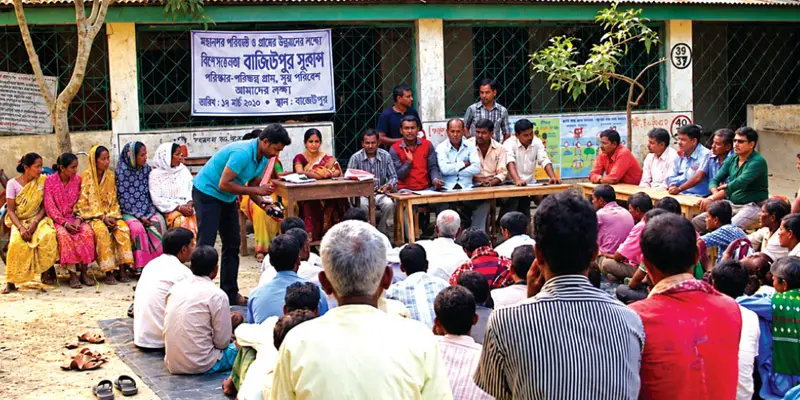
Jan Bhagidari further strengthens sanitation as a shared community responsibility. Cleanliness drives bring together panchayat representatives, SHGs, youth, schools and local communities to translate collective ownership into regular action.
The ultimate objective of rural sanitation is sustained behaviour and collective ownership. An ODF Plus village must not only sustain ODF status but also manage solid and liquid waste and maintain a clean environment. India’s sanitation journey has, therefore, moved from access to usage, and from usage to sustainability.
Jan Bhagidari further strengthens sanitation as a shared community responsibility. Cleanliness drives bring together panchayat representatives, SHGs, youth, schools and local communities to translate collective ownership into regular action
A new economy around sanitation
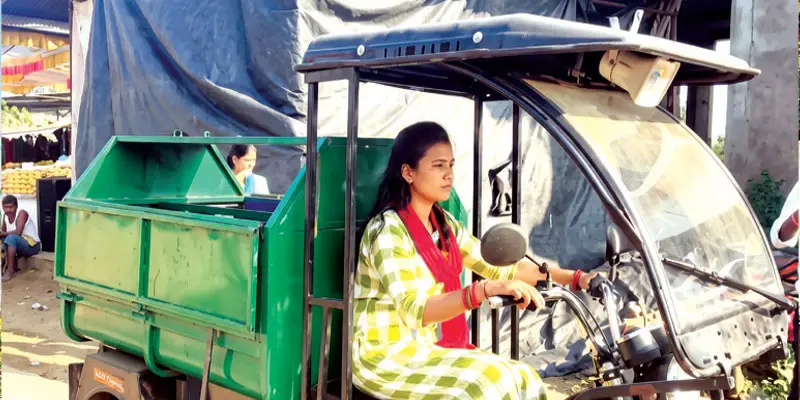
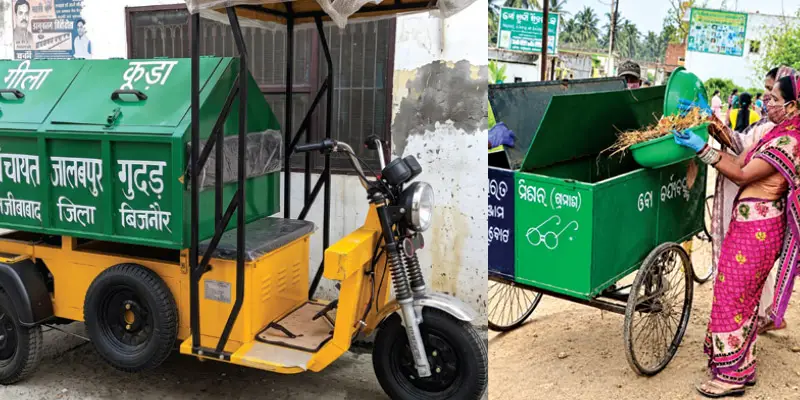
As collective sanitation systems take shape, they can also generate new livelihood opportunities. In Betul, Madhya Pradesh, Babita Dhurve found a livelihood opportunity through household waste collection.
After losing both parents in 2021, she approached her Gram Panchayat to operate an e-rickshaw for waste collection. Despite initial community resistance, she learned to operate the vehicle and became the district’s first woman e-rickshaw waste collector, enabling her to earn a livelihood while remaining in her village.
With around 100 Gram Panchayats in Betul now using waste-collection vehicles, the initiative demonstrates how sanitation systems can simultaneously strengthen village cleanliness and create local employment.
The livelihood potential of sanitation extends beyond waste management to the skills and services required to sustain sanitation infrastructure. In Nadia, West Bengal, the expansion of toilet construction created demand for trained masons, leading to the establishment of two masonry training institutes. Around 2,400 men and women were trained in toilet construction.
As sanitation systems expand, community-led efforts increasingly require appropriate infrastructure and technical support. Vedancha, Gujarat, demonstrates how community demand can evolve into a locally designed wastewater management system.
Its greywater treatment system was planned around local land and water-flow patterns, with local contractors supporting its operation and maintenance. Panchayat members, operators, and participating citizens were also trained to manage the system. The system treats 200 kilo-litres of greywater daily, with treated water used for irrigation and groundwater recharge.
The panchayat earns around Rs 2.5 lakh annually through compost and treated-water reuse.
An annual campaign for SHARED RESPONSIBILITY
Launched in 2017, Swachhata Hi Seva (SHS) is an annual campaign promoting citizen participation in cleanliness. It brings together Government institutions, local bodies, organisations, and citizens around shared responsibility for cleanliness.
The campaign strengthens the Jan Bhagidari approach by encouraging cleanliness as an everyday practice. Last year’s campaign witnessed participation from more than 18.06 crore people.
This year, Swachhata Hi Seva was kicked off on September 17, with the theme, ‘Swachhata Mein Sahbhag; Swachh Bharat, Viksit Bharat’. On October 1, people undertook collective shramdaan under ‘Ek Din, Ek Ghanta, Ek Saath’. Next day, special Gram Sabhas and cleanliness awareness programmes were organised in villages.
The campaign also promotes community action for cleaner public spaces and sustained cleanliness.