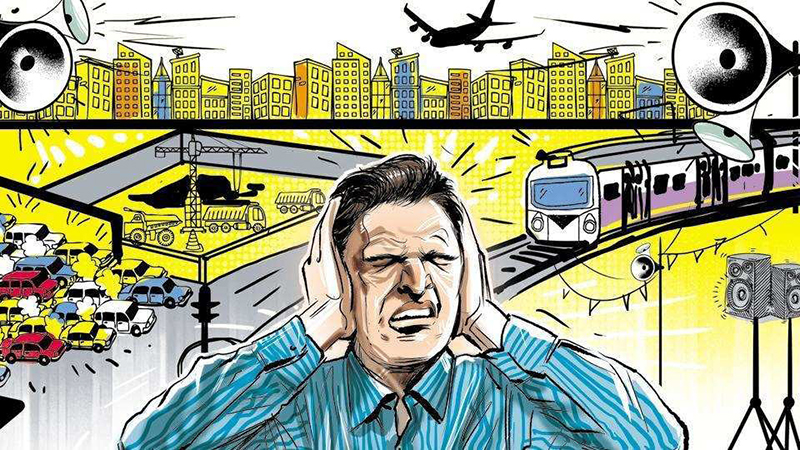
 With Diwali in the air, the pollution caused by crackers is again in the news. Apart from the impact on quality of air, the decibels of noise created are also a cause of concern. The United Nations Environment Programme’s Annual Frontier Report 2022 identified Moradabad in UP as the second most noise polluted city in the world. Out of 61 most noise polluted cities of the world, five are in India. The other four are Kolkatta, Asansol, Jaipur and Delhi; while the quietest city in the world is Ibrid in Jordan, followed by Lyon in France.
Simply explained, noise pollution is regular exposure to elevated sound levels that may lead to adverse effects in humans or other living organisms. As per its 1999 guidelines, WHO has laid down that sounds above 70 decibels are harmful for health.
There is no such thing as ‘silence’ on the planet, sounds occur continuously and everywhere. When sound is persistent and too loud it becomes noise pollution, which is now identified as a major environmental hazard. As our cities grow, the traditional sources of noise pollution are road, rail, air traffic and industry, as also from domestic, entertainment and leisure activities. High levels of noise pollution have been documented to impact human health and wellbeing, as also other living beings that inhabit a landscape. Apart from causing mere annoyance, persistent exposure to noise pollution leads to distress, sleeplessness, impacts cardiac health, causes other metabolic disorders and hearing impairment. Noise pollution plays a part in adding to the public health burden.
In many animal species, acoustic communication holds an important place in their survival. Reports find that many species have altered their pitches, timings and frequencies to beat the onslaught of city noises. For instance, in European cities, robins seem to sing more at night to avoid high acoustic interference during the day.
While some frogs exhibit gap-calling behaviour as they time their calls to breaks in noise. These changes in the long run can alter abilities to reproduce and lead to extinction of species from habitats. Increasing noise is not only affecting animals on land, it is also a growing problem for those that live in the ocean. Ships, oil drills, sonar devices, and seismic tests have made the once tranquil marine environment loud and chaotic. Whales and dolphins are particularly impacted by noise pollution.
On the other hand, the sounds in nature bring immense benefits to health and wellbeing. The sound of a river, rain, breeze and chirping of birds offers immense peace and relaxation. In a broader sense, tackling noise pollution is not about eliminating noise or sounds, but creating an acoustic environment where all species thrive and grow. Globally, many efforts are underway to tackle urban noise pollution.
Tree belts around highways and airports are reported to reduce noise by nearly 2 decibels. Planned greenery and vegetation in cities, including on rooftops also mitigates noise pollution. Measures such as sound barriers around railway tracks and highways, quieter vehicle engines and low-noise asphalt road surfaces, using quiet tyres in public transport and promoting use of electric vehicles are important in the easing of noise pollution.
Many cities are carving out quiet public spaces like gardens, parks and natural reserves where people can enjoy natural sounds. The emphasis on switching to bicycles around the world is also a measure to reduce noise pollution. Apart from the larger efforts, we can contribute at individual level too. Simple steps like not bursting crackers, turning off appliances, lowering volumes in private spaces, regularly maintaining our vehicles and other appliances, and wearing ear plugs if needed can be made a part of life. Above all, planting trees and increasing the vegetation around our living and work spaces can create pleasant soundscapes.