
Team Blitz India
NEW DELHI: On May 5, 2023, the World Health Organisation (WHO) revised the status of COVID-19: from being a Public Health Emergency of International Concern (PHEIC), the outbreak was reclassified as an “established and ongoing health issue”.
This change reflected the steady reduction in COVID-19-related deaths and hospitalisations across the world. In the nearly four years since the first reported case in December 2019, the pandemic resulted in more than 6.9 million deaths globally; stretched health and disaster management systems to the limit; and caused huge economic devastation, leading to the loss of livelihoods and deepening social inequalities.
Key response pillars
Coordination, planning and monitoring: Mechanisms were instituted in collaboration with various ministries to respond to the emergency. Wherever possible, national action plans for health security (NAPHS) and pandemic influenza preparedness plans (PIPPs) were rapidly adapted to address the pandemic.
Risk communication and community engagement: Due to the unknown nature of the virus, consistent, transparent and empathetic messaging was required to respond to rumours and misinformation.
Surveillance, rapid response
teams and case investigation: To regulate appropriate health measures, countries had to focus both on imported cases as well as local transmission through case identification, comprehensive contact-tracing, monitoring of geographical spread, disease trends, impact on healthcare services, among others.
Points of entry: Surveillance at points of entry and risk communication activities were regulated, monitored, and evaluated through the development of public health emergency plans.
National laboratories: The capacities of national laboratories to manage large-scale testing were augmented with support from WHO. Access to reference laboratories and additional supplies in case of surges were also supported.
Infection prevention and control: Infection prevention and control (IPC) protocols were reviewed consistently to prevent transmission of the disease among frontline workers.
Case management: Healthcare facilities had to be prepared for an increase in the number of cases, plan care regimens on case-based priorities and take appropriate action to manage other essential healthcare services.
Operational support and logistics: Logistical arrangements were reviewed to ensure the availability of resources and supply chain control and management.
Strengthening of essential health services and systems: To directly address the surge in mortality from COVID-19 and other preventable and treatable conditions, countries decided to strike a balance between responding directly to the pandemic while strategically planning and coordinating actions to sustain the delivery of essential health services (EHS), which mitigated the risk of a system collapse.
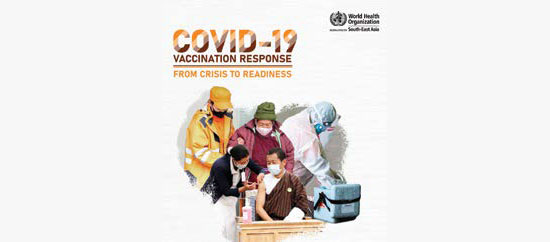
Vaccination rollout: Region- and country-specific strategies and action plans had to be drawn up, implemented and reviewed to vaccinate 70% of the population to achieve herd immunity.
Leadership and vision
At the global level, WHO took the lead in forming global alliances and collaborations for vaccine rollout, along with other leading development partners, such as the United Nations Children’s Fund (UNICEF), Gavi, the Vaccine Alliance, the Coalition for Epidemic Preparedness and Innovation (CEPI), the World Bank Group (WBG) and the Asian Development Bank (ADB).
The Access to COVID-19 Tools (ACT) Accelerator was established for coordination of vaccine development efforts and to ensure equity in access to testing, treatment and, later, vaccines.
Through visionary global governance, largely sanctioned through the COVID-19 Vaccines Global Access (COVAX) facility, all Member States were informed of and aligned to the global pandemic response. Steps were also taken to ensure equitability of vaccine access to all Member States, and prevent vaccine nationalism in the form of over- or blockbooking by wealthier Member States, thereby preventing discriminatory practices in vaccine access. At the regional level, a number of actions were taken to ensure a timely and effective vaccination response.