
NEW DELHI: When the United Nations framed the Millennium Development Goals (MDGs) in the early 2000s, the framework suffered from a glaring omission: it focused almost exclusively on material metrics like reducing poverty rates, expanding primary education, and lowering child mortality.
It treated peace, rule of law, and institutional governance as mere optional by-products of economic growth rather than its foundational prerequisites.
By 2015, as the international community evaluated the post-2015 development agenda, a profound consensus emerged from global consultations. Economists, human rights advocates, and policymakers realised that people cannot be sustainably lifted out of poverty if corrupt courts, systemic violence, and fragile institutions routinely strip them of their land, labour, and safety.
Shift in thinking
Thus, Sustainable Development Goal 16 (Peace, Justice, and Strong Institutions) was born out of a revolutionary shift in global thinking. The core philosophy was simple yet radical: development without justice is merely temporary relief.
The architects of SDG 16 argued that transparent institutions, legal identity for all, access to swift justice, and the elimination of illicit financial flows are not luxury add-ons for wealthy nations; they are the bedrock shock absorbers required for any society to thrive over the long term.
Before SDG 16 codified this goal in 2015, international efforts in peace and justice were fragmented across specialised treaties, human rights bodies, and ad-hoc tribunals. Prior to 2015, these efforts were treated as diplomatic or legal crises management rather than core economic development metrics.
When major superpowers or dominant nation-states bypass international law, launch unilateral military actions, or selectively ignore multilateral rulings, it exposes the inherent fragility of a global system built on voluntary compliance rather than enforceable coercion.
Three realities
The sanctity of SDG 16 in a cynical geopolitical climate rests on three realities:
Legal and moral North Star: Without SDG 16 and international frameworks, there is no standardised vocabulary to call out hypocrisy. It establishes an objective benchmark against which the actions of all nations can be judged.
Weapon of accountability: Norms constrain behaviour over time, even when powerful actors try to break them. Domestic courts, international investigative bodies, and global public opinion use these SDG metrics to build pressure against institutional erosion.
Local resilience: While superpowers may project power outward, SDG 16 functions on the ground in developing nations as a demand-side tool. It empowers local civil societies, activists, and marginalised communities to demand transparency, land rights, and police reform from their governments.
Can UN ensure it?
The United Nations is not a world government; it is a diplomatic membership organisation. It possesses no standing Army, no independent tax collection authority, and no direct enforcement power over sovereign states.
Because of this structural design, the UN cannot physically force a defiant nation to respect institutional norms or stop a superpower from flouting global rules. However, it drives accountability through distinct structural levers:
Peer pressure and data: The UN utilises rigorous data tracking, public reporting, and annual forums where nations must openly report their progress on SDG targets. Governments care deeply about their international reputation, credit ratings, and investment attractiveness, which depend heavily on maintaining stable governance scores.
Norms and standards: The UN builds the legal scaffolding – from anti-money laundering frameworks to environmental and labour standards — that eventually gets absorbed into national laws and corporate ESG mandates.
Convener of last resort: In crises, the UN remains the only universal platform where opposing nations are forced to sit at the same table, keeping diplomatic channels open when bilateral relations completely collapse.
India’s blueprint
For a sprawling, diverse democracy like India, navigating SDG 16 is an exercise in managing monumental scale. With a population crossing 1.4 billion and a judicial backlog that has historically tested the patience of citizens, India’s approach to Goal 16 has undergone a profound digital and administrative transformation.
SDG 16 was born out of a revolutionary shift in global thinking. The core philosophy was simple yet radical: development without justice is merely temporary relief
At the heart of India’s strategy is the modernisation of the justice delivery system. Initiatives like the Inter-operable Criminal Justice System (ICJS) and the nationwide expansion of e-courts have integrated police, prisons, courts, and forensic labs onto a single digital grid, cutting down trial delays and administrative friction.
The push towards Alternate Dispute Resolution (ADR) mechanisms, digitalised land records and legal aid clinics has aimed to bridge the justice gap.
Simultaneously, institutional integrity and transparency have been bolstered through robust legislative and digital frameworks. The Right to Information (RTI) infrastructure, combined with digitised public procurement platforms and anti-money laundering tracking, target illicit financial flows and administrative corruption at the root.
India’s national targets under Goal 16 focus explicitly on reducing case pendency, strengthening cyber-crime response units, and ensuring that grassroots security and grievance-redress mechanisms are accessible, swift, and transparent.
Where world stands
Globally, SDG 16 remains one of the most fiercely contested and unevenly met goals. While Western European and Nordic nations consistently rank at the top of the Rule of Law Index, developing regions face severe headwinds.
Yet, global innovation in justice has also accelerated. Nations from Estonia to Rwanda have pioneered digital-first court systems, blockchain-backed land registries, and open-data governance models that prove transparency is the most effective disinfectant for institutional decay.
The global lesson of SDG 16 is clear: strong institutions are not built overnight; they require continuous civic vigilance, technological modernisation, and an unwavering commitment to human rights.
With a population crossing 1.4 billion and a judicial backlog that has historically tested the patience of citizens, India’s approach to Goal 16 has undergone a profound digital and administrative transformation
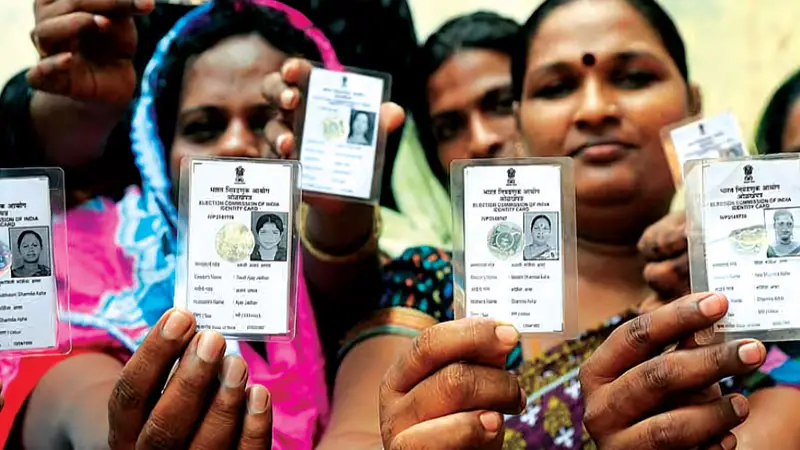
The Right to Identity
A foundational yet frequently overlooked target under SDG 16 (specifically Target 16.9) is providing legal identity for all, including birth registration.
Power of a number: Without a birth certificate or legal identity, a human being legally does not exist. They are locked out of banking, public education, healthcare subsidies, property ownership, and formal labour markets.
India’s ecosystem: Through expansive foundational digital identity ecosystems, India achieved near-universal legal recognition for its adult population, creating an unprecedented verifiable baseline for civic participation.
Spillover effects: International human rights bodies increasingly recognise that robust digital identity infrastructure, when coupled with strict privacy safeguards, is the ultimate shield against human trafficking, child labour, and systemic disenfranchisement.

The silent magistrate
While traditional courtroom backlogs often dominate headlines, a quiet revolution is unfolding in the realm of Online Dispute Resolution (ODR).
Beyond the courtroom: ODR leverages digital platforms, asynchronous messaging, Artificial Intelligence-assisted mediation, and virtual hearings to resolve civil and commercial disputes.
Democratising access: For small-scale merchants, gig workers, and rural citizens trapped in low-value contract disputes, traditional litigation costs often exceed the disputed amount. ODR provides a fast, low-cost, and binding alternative.
Institutional decongestion: By shifting millions of minor financial and consumer disputes to digital arbitration channels, ODR relieves immense pressure on traditional judicial systems, allowing judges to focus on critical matters.