Parth Nadpara
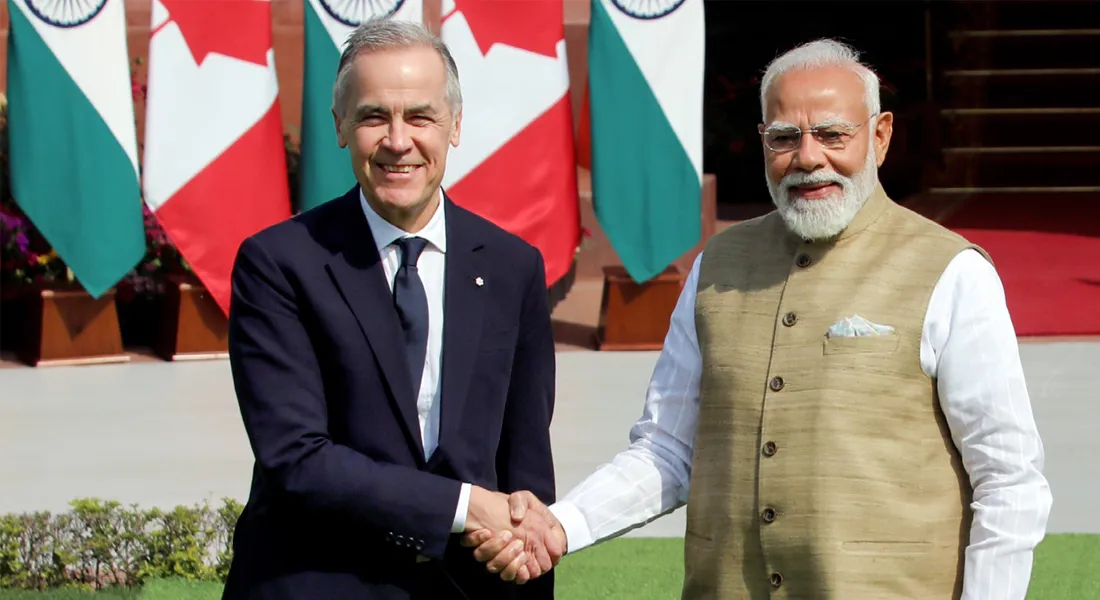
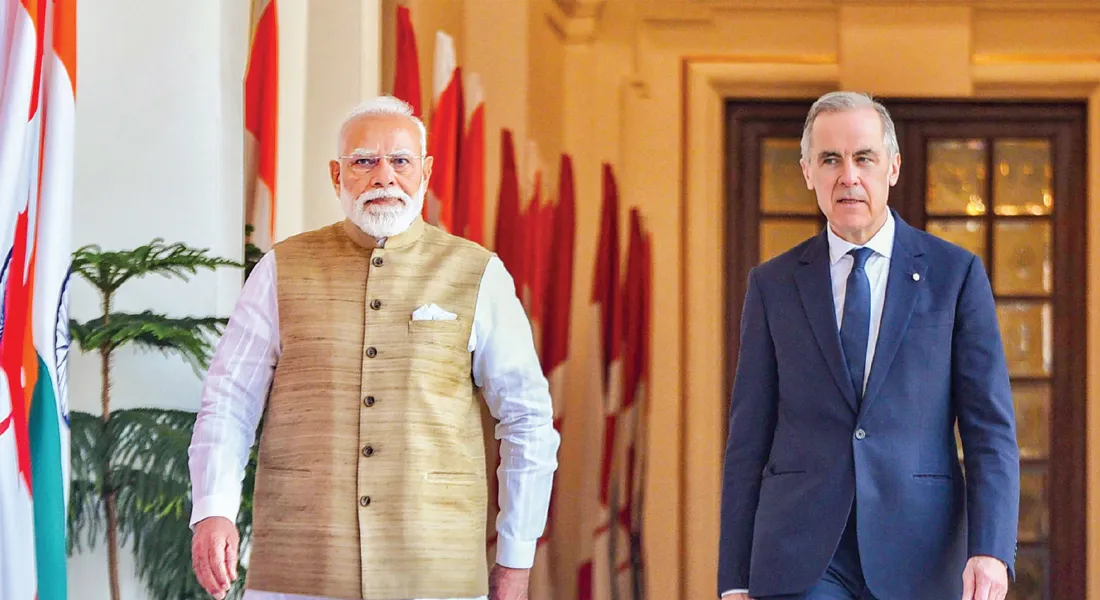
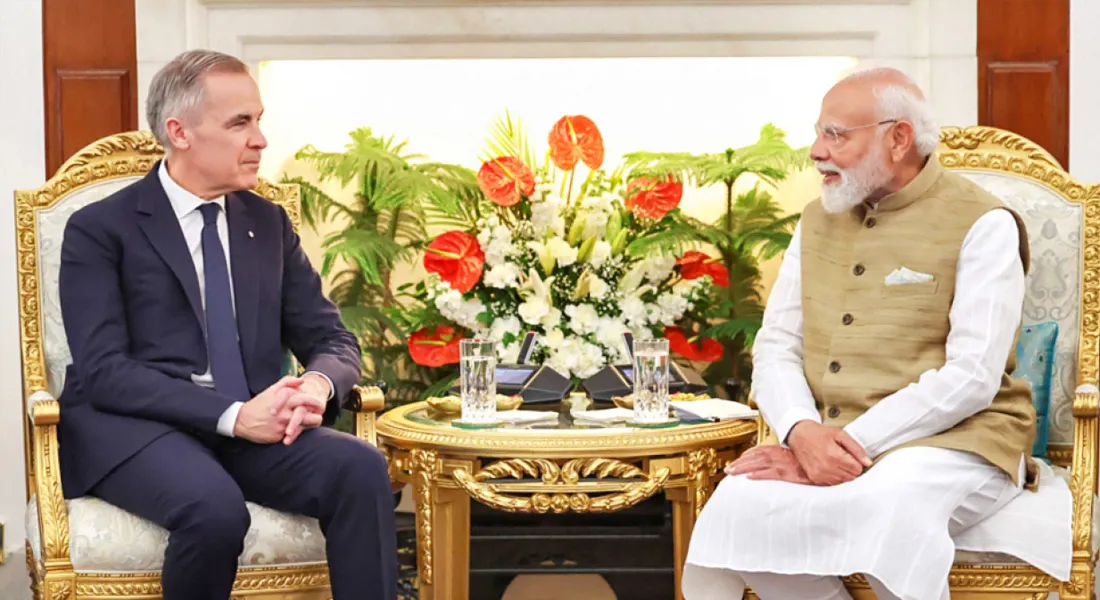
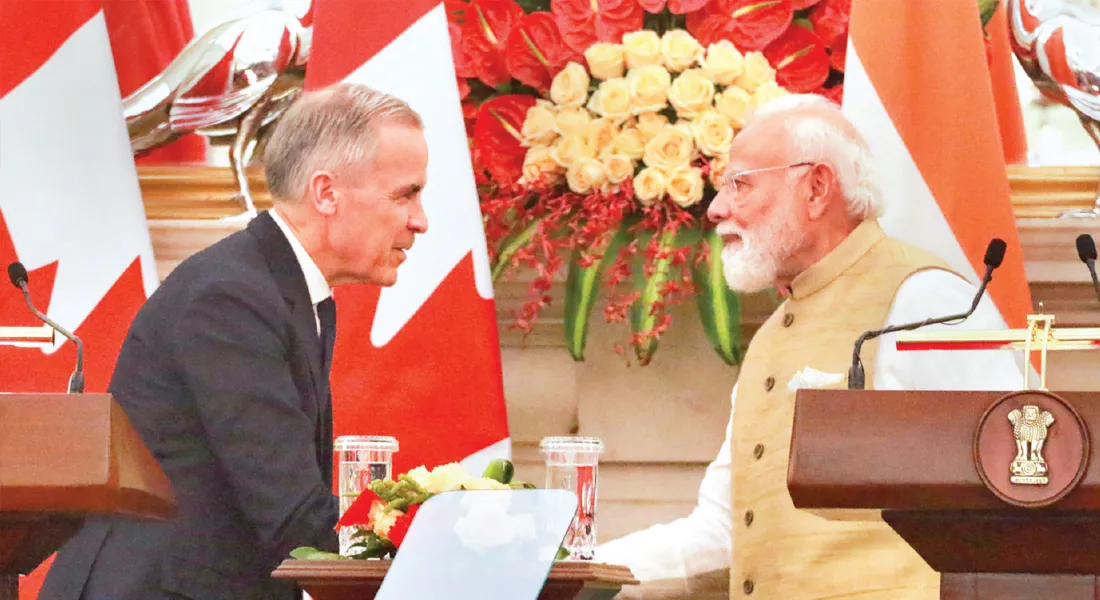
NEW DELHI: After nearly two years of diplomatic chill, ties between India and Canada appear to be on the mend, marked by a calibrated reset during Canadian Prime Minister Mark Carney’s visit to New Delhi from February 27 to March 2. The trip, while cautious in tone, signalled a mutual recognition that prolonged estrangement was hurting economic and strategic interests on both sides.
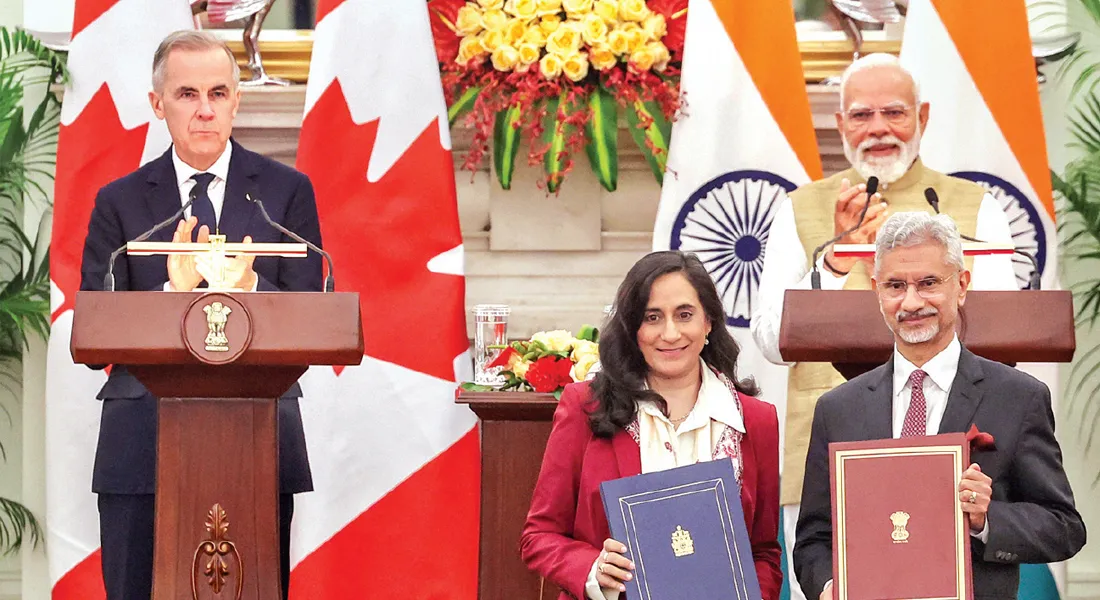
Carney’s visit marked the most substantive political outreach since the rupture in ties towards the end of former Prime Minister Justin Trudeau’s tenure. Officials on both sides described the talks between Prime Minister Narendra Modi and his Canadian counterpart as “constructive” and forward-looking, with agreement to restore senior diplomatic representation, resume structured trade negotiations and revive working groups on mobility and investment.
Tangible benefits
For India, which hosts over 400,000 students in Canada and counts the latter among the top sources of pension fund investment, normalisation carries tangible benefits. For Ottawa, rebuilding trust with the world’s fastest-growing major economy is equally strategic. Economically, the gains could be significant. Canadian pension giants have invested billions in Indian infrastructure, renewables and logistics platforms. With India pushing large-scale capital expenditure and green transition projects, the reopening of institutional channels may accelerate fresh inflows.
India-Canada ties reset
After a long diplomaic chill, the two countries make constructive gains during Carney’s visit
Agricultural trade – especially pulses and fertilisers – also stands to stabilise, reducing supply volatility. For Canada, expanding and diversifying trade partnerships is critical in view of its souring relations with the United States, its largest trading partner. Ottawa faces the risk of heightened trade uncertainty within the United States-Mexico-Canada Agreement (USMCA) which is crucial because roughly 70-75 per cent of its exports go to the United States. That deep integration makes the Canadian economy highly sensitive to any shifts in US trade policy.
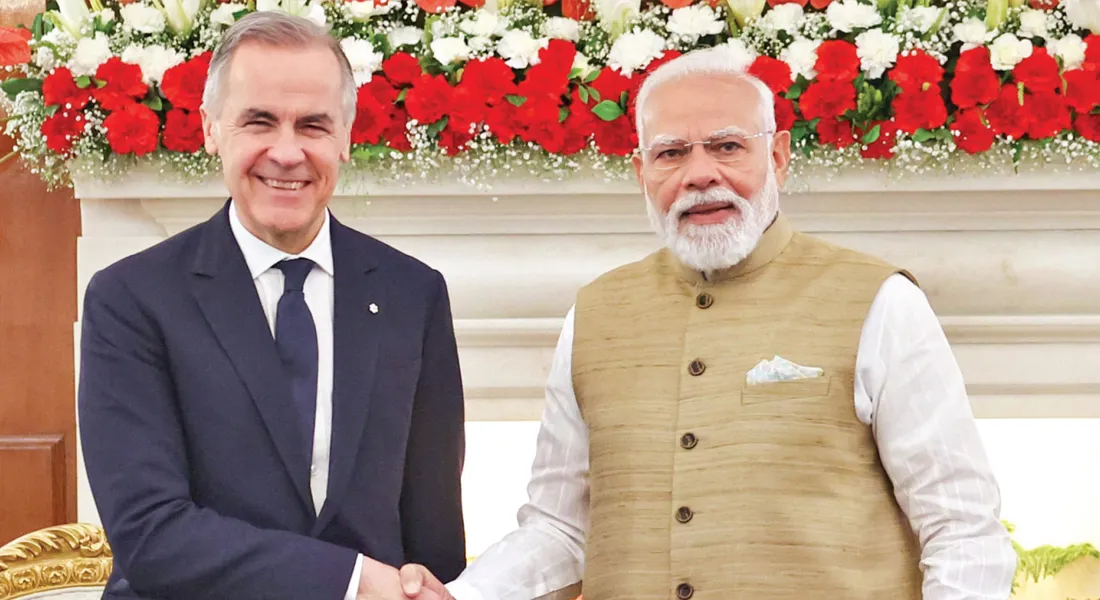
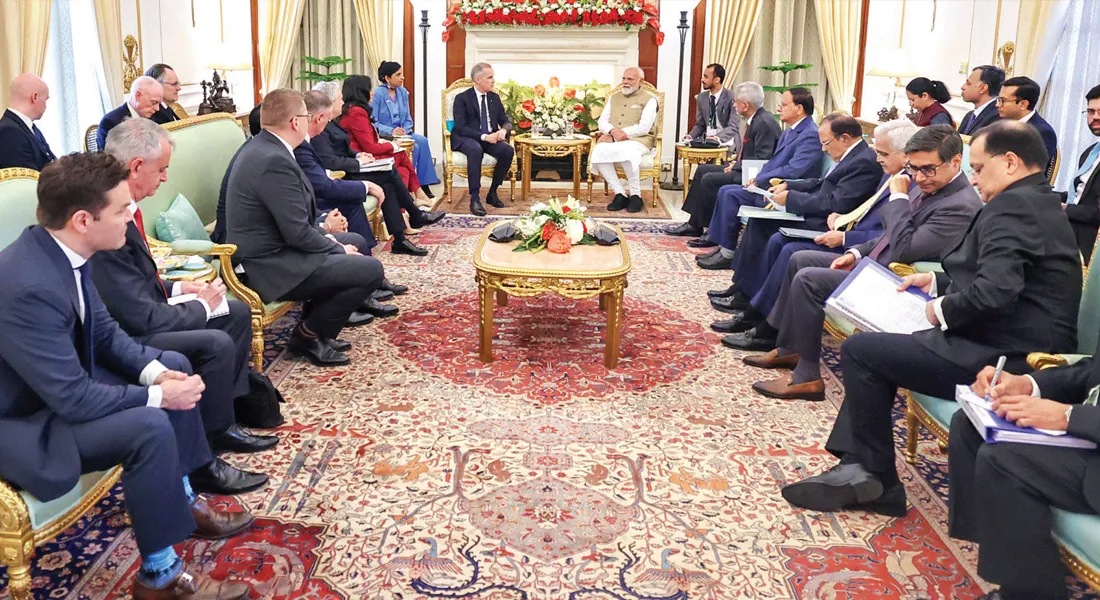
For India, too, the geopolitical calculus is shifting. As Washington debates tariff walls and supply-chain realignments, New Delhi is keen to expand trade corridors with middle powers that share democratic and IndoPacific interests. A thaw with Canada fits into that broader strategy.
While Carney’s visit did not produce dramatic headline-grabbing agreements, its symbolism was powerful. It re-established political dialogue at the highest level, lowered rhetorical temperatures and reopened pathways for economic cooperation.
In diplomatic terms, the visit was less about immediate breakthroughs and more about restoring predictability. Carney’s New Delhi outreach may thus prove a turning point – not just in bilateral ties, but in shaping a more diversified economic strategy for both nations.
Relations between the two countries had frayed sharply in 2023 after the then-PM Trudeau alleged potential Indian involvement in the killing of a Khalistani separatist on Canadian soil, an accusation New Delhi rejected as “absurd”. The fallout saw reciprocal expulsions of diplomats, suspension of trade talks and a freeze in high-level engagement.