
Sukumar Sah
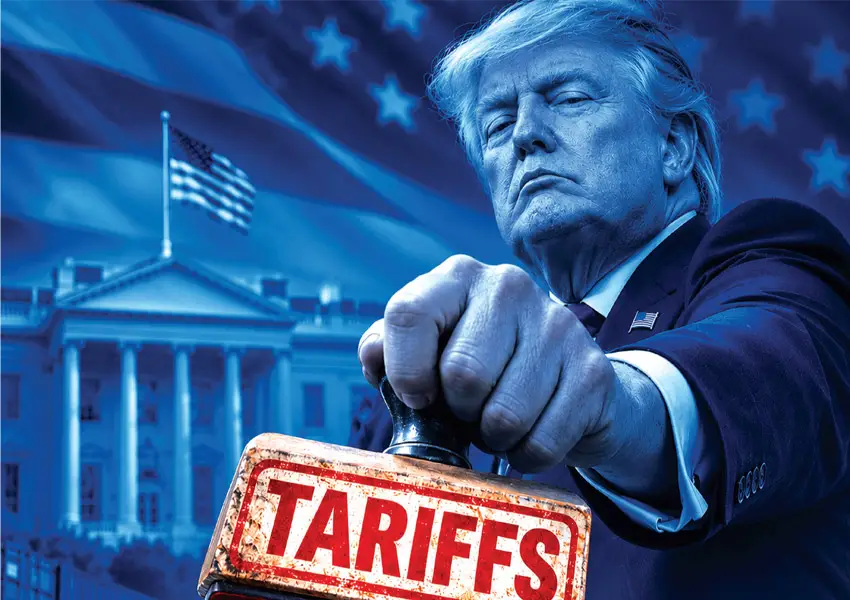
Donald Trump is at it again. The US Administration on November 25 proposed tariffs of up to 25 per cent on Indian goods as part of a new offensive against 14 trading partners, offering to cap India’s rate at 17 per cent if a reciprocal trade agreement is reached. The move comes despite the US Supreme Court striking down Trump’s earlier sweeping tariff policy on February 20, 2026, prompting Washington to pursue a different legal route.
The proposal announced by the US Trade Representative (USTR) under Section 301 of the Trade Act of 1974, follows an investigation into what Washington calls structural excess industrial capacity and manufacturing practices that disadvantage American producers. India is among 14 economies targeted, alongside China, the European Union, Japan and South Korea.
The US alleges that some countries produce more manufactured goods than their domestic and global markets can absorb, partly because government policies encourage factories to expand production beyond what normal market demand would justify. In other words, Washington argues that governments are helping their manufacturers produce too much, creating unfair competition for American industries.
Intriguingly, India, despite being a strategic US partner, faces a proposed 25 per cent tariff, while Russia has escaped this particular exercise.
For India the last major punitive increase came on August 27, 2025, when Washington imposed an additional 25 per cent duty linked to India’s purchases of Russian oil, taking the burden on many Indian exports to 50 per cent. That penalty was withdrawn in February 2026. The Supreme Court struck down the earlier reciprocal tariffs imposed under emergency economic powers, not every US tariff.
For New Delhi, the latest tariff hike proposal presents a balancing act: restoring export competitiveness without diluting industrial policies, exposing farmers to import competition or surrendering regulatory autonomy.
The reduction to 17 per cent could provide relief to exporters in labour-intensive sectors such as textiles, leather, gems and jewellery, engineering goods and pharmaceuticals. But Washington is expected to seek reciprocal concessions, including greater access to India’s consumer market, increased purchases of American goods and changes to policies it considers restrictive.
India’s strategy should centre on selective market opening rather than across-the-board tariff reductions. Greater access for American industrial machinery, medical equipment, aircraft components, energy products and specialised technology could lower input costs and improve productivity for Indian manufacturers. Such concessions would address Washington’s commercial demands without exposing sensitive domestic industries to unrestricted competition.
Energy and technology purchases could provide leverage. India could expand commercially viable imports of American LNG, crude oil, aircraft and semiconductor technology in exchange for predictable access for Indian exports.
Agriculture is likely to be one of the most difficult negotiating areas. Washington wants to expand exports of nuts, fruits, soybean oil and animal-feed ingredients. India could consider selective tariff reductions and tariff-rate quotas where domestic supplies are inadequate or import competition would have limited impact.
But unrestricted access for American dairy, wheat, rice, sugar and pulses could threaten farmers’ livelihoods and invite political opposition. New Delhi would need safeguards, quotas and product-specific exemptions to protect vulnerable agricultural communities.
India should also seek preferential treatment for employment-intensive exports, including textiles, garments, footwear, leather products, gems and jewellery, pharmaceuticals, auto components and speciality chemicals. These employment-intensive industries are vulnerable to shifts in sourcing. India should also protect generic medicines and active pharmaceutical ingredients, where it is a major global supplier.
Beyond market access, India will need to address Washington’s concerns about its industrial incentives. The US has questioned what it describes as structural excess capacity and government support that creates competitive distortions. India maintains that its production-linked incentive schemes build domestic manufacturing, generate employment and reduce import dependence.
The capping of US tariff on India at 17 per cent could provide relief to exporters in labour-intensive sectors but Washington is expected to seek reciprocal concessions, including greater access to India’s consumer market, increased purchases of American goods and changes to policies it considers restrictive
New Delhi could submit evidence on investment, capacity utilisation, domestic consumption, employment and exports to challenge these allegations. It must preserve the policy space needed to support semiconductors, electronics, clean energy and advanced manufacturing.
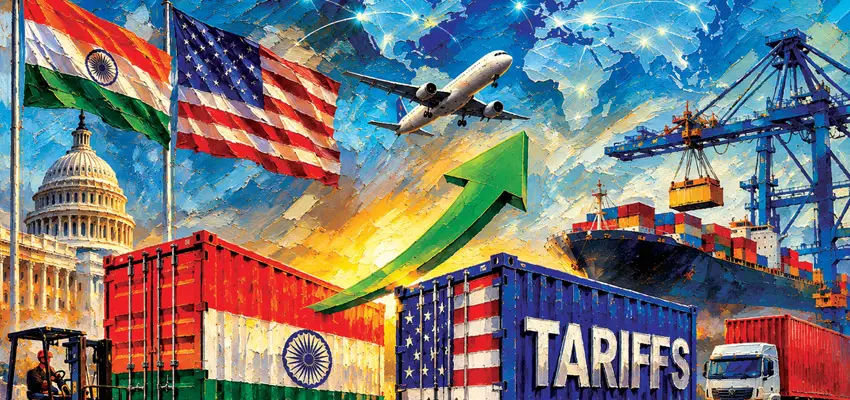
Digital trade could become another contentious issue. American technology companies want greater access to India’s digital market and have raised concerns about data localisation, cross-border data flows, digital taxation and regulation. India could offer greater transparency and predictable compliance procedures while retaining the ability to regulate sensitive data, protect consumers and safeguard national security.
A phased agreement could offer a way forward. The 17 per cent ceiling could take effect upon signing, followed by sector-specific concessions over 12 to 24 months. This would give India immediate relief while allowing time to negotiate complex regulatory and market-access issues. New Delhi should insist that the lower ceiling cannot be withdrawn merely because talks on unrelated matters encounter difficulties.
India’s role as an alternative manufacturing destination to China, a pharmaceutical supplier and an Indo-Pacific partner gives it strategic leverage. American companies diversifying production also need a stable, expanding Indian market.
But India’s leverage is not unlimited. The US remains one of the world’s largest consumer markets, and higher duties could quickly hurt Indian exporters. New Delhi must combine strategic arguments with commercially meaningful offers rather than rely on geopolitical considerations alone.
The objective should be an agreement that improves market access, attracts investment and facilitates technology transfer without weakening domestic manufacturing or agriculture. The proposed reduced tariff ceiling will test India’s ability to gain access to the US market while preserving the policy flexibility needed to build a competitive manufacturing economy.