

Blitz Bureau
Samantha Lawler, an associate professor of astronomy at the University of Regina in Canada, recently published a research paper examining the potential impact of regulatory filings involving major tech players like SpaceX and Blue Origin, owned by Elon Musk and Jeffrey Bezos, respectively.
Another filing is from Cowboy Space, owned by Baiju Bhatt, the former co-founder and CEO of stock trading platform Robinhood.
According to a CTV News report, in peer review stage at the moment, Lawler’s paper titled “Rings in the Sky” says that even one of five possible projects going ahead could have severe consequences for the night sky and stargazers not just in Canada, but worldwide.
“It’s actually pretty horrifying to think about, but it would be a ring of satellites all moving across the sky together,” Lawler said. “Much brighter than the satellites that we see in the sky right now.”
What is an orbital data centre?
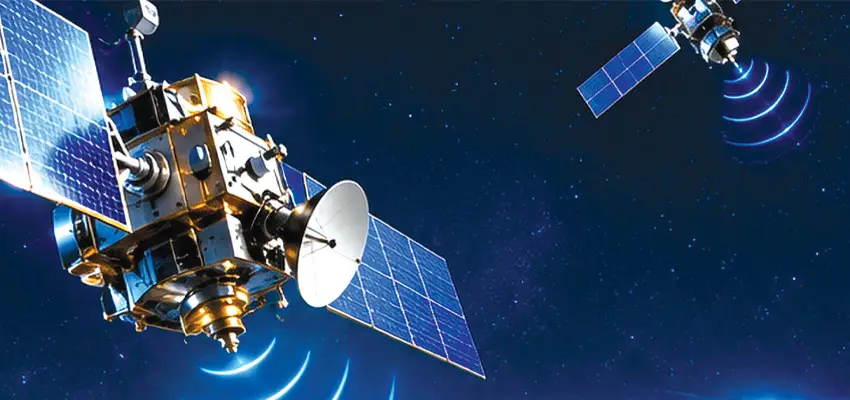
Orbital data centres are proposed as a series of satellites known as constellations that would deliver “unprecedented computing capacity to power advanced artificial intelligence (AI) models and the applications that rely on them, according to the US Federal Communications Commission (FCC) filing from SpaceX.
“By directly harnessing near-constant solar power with little operating or maintenance costs, these satellites will achieve transformative cost and energy efficiency while significantly reducing the environmental impact associated with terrestrial data centers,” SpaceX said.
Some major companies have filed plans for satellite-based AI data centres in the future. One Canadian researcher and astronomer is asking them to consider the consequences for everyone.
The company contends that the system would go so far as putting humanity on a first step towards “becoming a Kardashev II-level civilisation,” one that is able to harness the whole of the sun “supporting AI-driven applications for billions of people today and ensuring humanity’s multi-planetary future amongst the stars.”
SpaceX is proposing to launch “up to one million satellites” as part of its constellation known simply as the SpaceX Orbital Data Center System. It’s the largest of the three projects covered in Lawler’s research.
Blue Origin’s application for what it calls “Project Sunrise” would consist of up to 51,600 satellites.
“Project Sunrise system will ease mounting pressure on US communities and natural resources by shifting energy – and water intensive compute away from terrestrial data centers, ” Blue Origin’s application said.
Cowboy Space’s Stampede project would include up to 20,000 satellites. The proposal’s timeline puts a target of 2028 for the system’s first launch. Blue Origin set a timeline to launch 50 per cent of its satellites “within six years following grant of the authorization” and the other half coming online three years after that.
SpaceX did not offer a target timeline for its project in the filings.
‘Cannot get away from reflected light’
Lawler is among a group of experts who have spent years flagging the potential consequences of light pollution caused by satellites for both astronomers and stargazers.
“As a scientist, I write papers and make predictions, and I usually hope those predictions will come true,” Lawler said. “But in this case, I actually hoped I was wrong and that it wouldn’t be as bad as predicted.”
Orbital data centres on the scale proposed would add to a night sky that becomes more and more crowded with every launch. “Today, there are 17,000 satellites and there’s plans for 2 million satellites,” says Lawler.
One major factor was the development of Starlink, SpaceX’s satellite-based internet service.
“Starlink satellites, they have done some work to make them fainter, but at the same time, they have made them larger and put them on lower orbits, which makes them brighter than they were before,” Lawler said.
“So, they’re still very easily visible in the night sky. There’s also several other companies that are launching hundreds and thousands of satellites. So, it’s not just Starlink in the game anymore.”
Lawler said larger satellites at these orbits would still present problems, even with efforts to reduce the amount of reflected light – especially at the orbits the data centre proposals suggest.
“The more surface area, the brighter they’re going to be,” Lawler said.
The influx has created a range of problems for astronomers. Lawler said the problem has made research from taxpayer-funded telescopes less effective and makes data less useful. It’s also making it more difficult for everyday people to enjoy a starlit sky – even in Saskatchewan, which has some of the darkest skies in North America.
Data centres in space ‘not a solved problem’
Stressing she is not an engineer, Lawler said several challenges need to be solved for any orbital data centres, namely surrounding heat and radiation. “[Electronics] are subject to solar storms that are outside the earth’s atmosphere. This is hard,” Lawler said. “Companies have gotten better at it, but not to the point of putting an entire data center into orbit. That is not a solved problem.” Another issue Lawler foresees is access for repairs and upgrades.
Despite the problems that would need to be overcome on these kinds of projects, Lawler’s view is staying ahead of what companies are planning – especially when it comes to the impact on the night sky.
Risks of re-entry

One of the biggest risks of putting too many satellites in space would be the fall-out of home-comings.
Lawler was one of the people on site on a Saskatchewan, Canada, farm in 2024, after at least eight pieces of space junk were scattered into Saskatchewan fields – some of them as big as six feet tall and weighing more than 100 pounds.
“They didn’t cause any damage, but they could have,” Lawler said.
The pieces are believed to have been part of a SpaceX Dragon Capsule and were picked up by two people in a UHaul truck who identified themselves as employees of the company – but did not make any comments to media in attendance.
“If we keep adding things into orbit, and then of course all those satellites are coming down,” Lawler said, adding she worries about the potential impact of debris crashing into a more populated area.
“Every time one of these re-enters, it’s a roll of the dice whether stuff will make it to the ground and whether it’s going to hit someone … This is not something I want people to be personally worried about, getting hit by space junk, but someone, somewhere, is eventually going to be impacted by debris.”
Lawler said more satellites would compound that issue and only add to the risk.
“There’s one or two Starlink satellites re-entering every day. With a million data centres with five-year lifetimes, that would be one re-entry of a four-tonne satellite every three minutes,” she explained.
“So that that’s a lot of dice rolling.”
In a section on its website, SpaceX said it is confident its anti-collision mitigation technology can support arrays of this size.
The issue of space junk re-entering the atmosphere is what inspired Independent Alberta Senator Paula Simons to open a Senate Inquiry on the “Emerging Problem of Satellite Debris Falls” in March.
But it’s just one piece of the public policy puzzle for an issue that could affect everyone.
There’s no confirmation of when the data centre filings could be considered by the FCC.