Blitz Bureau
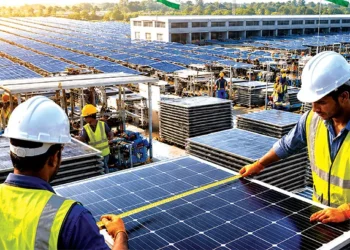
India’s clean-energy machine is running hot. Installed solar capacity has crossed 150 gigawatts — reaching about 150 GW by the end of March and climbing toward 157 GW by late May — after more than 21 GW of solar was added in just the first five months of 2026.
The wider picture is just as striking. In the financial year to March, India added a record of roughly 55 GW of non-fossil capacity, its highest in any single year, lifting total renewable capacity to around 275 GW. Solar now makes up the largest slice of that clean fleet, ahead of wind and hydro.
Every gigawatt of home-grown clean power is also an energy-security investment — the cheapest insurance against the next spike in the oil price.
At a Glance
- Solar: Past 150 GW (Mar), nearing 157 GW by late May
- Added: 21+ GW of solar in Jan–May 2026
- Record year: ~55 GW of non-fossil capacity added in FY26
- Total renewables: Around 275 GW and rising
There is a direct line from this build-out to the week’s other headlines. As a Gulf risk premium pushes crude higher, every unit of solar and wind on the grid is a unit of demand insulated from imported-fuel prices — energy security bought at home rather than hedged abroad.
The honest challenge is what comes after generation: storage, transmission and grid balancing must scale alongside the panels so that clean electrons are available after sundown and in the evening peak. The constructive read is that India is adding capacity faster than almost anyone — and the next chapter, batteries and a stronger grid, is where a good decade for power is won.