NEW DELHI: When the United Nations transitioned from the Millennium Development Goals (MDGs) to the Sustainable Development Goals (SDGs) in 2015, the architects of the new framework recognised a profound historical contradiction. The preceding era had witnessed unprecedented leaps in agricultural productivity and industrial food output, yet hundreds of millions of human beings still went to sleep with empty stomachs. The old MDG metric targeted merely halving the proportion of hungry people; by 2015, global leaders realised that half-measures were morally indefensible and economically short-sighted.
Thus, Sustainable Development Goal 2 (Zero Hunger) was born out of an uncompromising philosophical shift: food security was reclassified not merely as a matter of charity or humanitarian relief, but as a fundamental human right and the absolute prerequisite for human capital development.
The architects understood that chronic malnutrition in a child’s first thousand days permanently stunts cognitive and physical growth, locking generations into cycles of intergenerational poverty. SDG 2 was designed to go beyond mere calorie counting. It aimed to completely eradicate undernourishment, double agricultural productivity for small-scale food producers, champion sustainable farming systems, and maintain the genetic diversity of seeds and farmed animals by 2030.
Fragile recovery
Evaluating the global landscape reveals a complex narrative of incremental recovery shadowed by deep structural vulnerabilities. According to comprehensive multi-agency United Nations assessments, global hunger levels have begun a gradual, consecutive decline, demonstrating that targeted policy interventions can yield results. An estimated 645 million people, roughly 7.8 per cent of the global population, face chronic undernourishment. While this marks a welcome downward correction from post-pandemic peaks, it remains higher than pre-2020 baselines, leaving the international community severely off-track to achieve absolute zero hunger by the 2030 deadline.
The geography of hunger has also shifted. While regions in Asia and Latin America have made steady structural headway through robust public distribution systems and agricultural modernisation, parts of sub-Saharan Africa have emerged as the new epicentres of severe food insecurity, driven by compounding pressures of rapid population growth, regional conflicts, and localised climate shocks. Beyond outright hunger, a staggering one-third of the global population remains unable to afford a healthy, nutrient-dense diet, exposing billions to hidden hunger, micronutrient deficiencies, and diet-related chronic illnesses.
Major impediments
The failure to swiftly eradicate hunger is not a consequence of physical scarcity – the world produces more than enough calories to feed its entire population. Instead, the barriers are structural, political, and environmental.
Climate volatility: Unpredictable monsoon patterns, prolonged droughts, and catastrophic floods have devastated agricultural yields across key breadbasket regions. Soil degradation and water table depletion further threaten long-term productive capacity.
Geopolitical conflicts: Modern conflicts routinely weaponise food supplies, block grain exports, and spike global fertiliser and energy prices, triggering inflationary shocks that price the poor out of basic nutrition.
Costly nutritious food: While staple grains like rice and wheat are often heavily subsidised, nutrient-dense foods – fresh fruits, vegetables, and animal-source proteins – suffer from inefficient supply chains, poor cold-storage infrastructure, and massive post-harvest loss. Consequently, empty calories remain cheap, while real nutrition becomes a luxury.
The new frontier
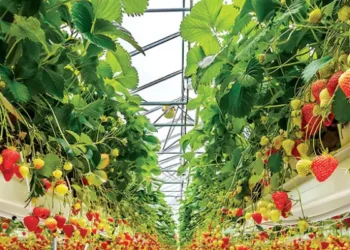
To overcome these barriers, science and technology have stepped in to redefine modern agriculture. The old paradigm of input-heavy, resource-depleting farming is rapidly giving way to precision agriculture and biotechnology.
Climate-resilient crops: Agricultural scientists have successfully bred and deployed bio-fortified crop varieties – zinc-enriched wheat and iron-dense pearl millet – alongside drought, flood, and salinity-resistant seed strains that thrive in degraded soils.
Precision agronomy: Digital mapping, IoT soil sensors, and agricultural drones allow farmers to apply water, fertilisers, and crop protection chemicals with surgical precision. This slashes input costs while protecting local ecosystems from chemical runoff.
AI-driven supply chain: Artificial Intelligence is being harnessed to forecast market demand, optimise cold-chain storage corridors, and track produce from farm gate to retail shelf, drastically cutting down the staggering volumes of food lost to post-harvest spoilage.
Ending hunger is no longer an insurmountable technical puzzle; it is a test of political will, distribution equity, and institutional courage.
An estimated 645 million people, roughly 7.8 pc of the global population, face chronic undernourishment. While this marks a welcome downward correction from post-pandemic peaks, it remains higher than pre-2020 baselines