Sandeepp Saxena
NEW DELHI: THE World Ozone Day – celebrated every year on September 16 – reminds us about the ozone layer, which protects life on Earth from harmful ultraviolet rays. The United Nations started this day in 1994 to celebrate the success of the Montreal Protocol of 1987. This agreement came after the Vienna Convention of 1985, when scientists warned about the dangers of chemicals called chlorofluorocarbons (CFCs). These steps turned scientific warnings into global action, and today the ozone layer has started slowly healing.
The theme for the World Ozone Day 2025 was ‘From science to global action’, highlighting how science alerted the world about the threat of ozone depletion, and how unity among nations led to real progress. UN Secretary-General António Guterres said the healing of the ozone layer shows that countries can achieve real progress when they work together and follow science. But he warned that the same urgency is now needed to fight climate change, as the world is close to crossing the 1.5°C warming limit. He urged governments to cut down harmful cooling gases under the Kigali Amendment, which could help prevent up to 0.5°C of warming by the end of the century. The parties to the Montreal Protocol on Substances that Deplete the Ozone Layer reached the agreement in October 2016 in Kigali, Rwanda, to phase-down hydrofluorocarbons (HFCs).
India’s commitment
The Global Environment Facility (GEF) was created to help developing countries tackle ozone depletion, climate change, biodiversity loss, and international water issues. It also supports projects to phase out ozonedepleting substances in countries with economies in transition, which are often not eligible for Multilateral Fund assistance.
India has demonstrated strong commitment to the Montreal Protocol by phasing out key ozone-depleting substances ahead of schedule, establishing robust policies, and taking on a leadership role in global negotiations Early ODS phase-out: Phased out Chlorofluorocarbons (CFCs), Carbon Tetrachloride (CTC), and halons for controlled use by 2010, ahead of Montreal Protocol schedules.
Policy framework: Enacted Ozone Depleting Substances (ODS) (Regulation and Control) Rules in 2000, banning CFCs and halons in new equipment by 2003. Global leadership: Advocated for developing nations since 1989, securing the Multilateral Fund (MLF) in 1990 for technical and financial support.
HCFC Phase-Out: Met 2013 Hydrochlorofluorocarbon (HCFC) freeze and 2015 10 per cent reduction targets under HCFC Phase-out Management Plan (HPMP). RAC servicing: Trained over 20,000 technicians in the Refrigeration and Air Conditioning (RAC) sector under the National CFC consumption phase-out plan.’
Ahead of schedule
India proactively ceased the production and consumption of CFCs from August 1, 2008, 17 months ahead of the Montreal Protocol schedule, while ensuring the supply of pharmaceutical-grade CFCs for asthma and COPD patients during the transition period.
By 2010, India was approved for 343.6 MT of pharmaceutical CFCs for manufacturing MDIs, and by 2011, no CFCs were requested as CFC-free formulations were successfully developed and placed in the market. Recognising India’s progress, the 19th Meeting of the Parties (2007) decided to advance the phase-out of HCFCs by 10 years. The HCFC Phase-out Management Plan (HPMP) was prepared in close collaboration with industry, research institutions, and other stakeholders, with a Roadmap launched in 2009 to guide the accelerated phase-out schedule.
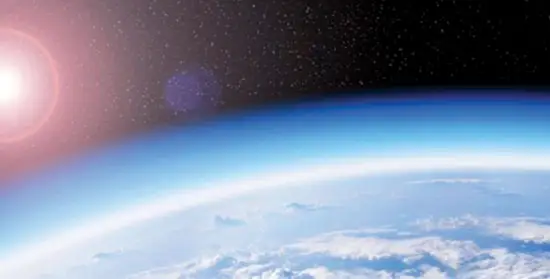
The ozone layer is a part of the stratosphere, found about 15–50 km above the earth’s surface, where most atmospheric ozone is concentrated. Ozone is a molecule made of three oxygen atoms, and its special property allows the ozone layer to act like Earth’s sunscreen. It absorbs most of the sun’s ultraviolet (UV) rays, especially UV-B, which can cause skin cancer, cataracts, damage to crops, materials, and marine life.
Ozone depletion is mainly caused by human-made chemicals such as chlorofluorocarbons (CFCs), halons, carbon tetrachloride, methyl chloroform, and methyl bromide. These substances are very stable and do not dissolve in rain, so they reach the stratosphere, where strong UV radiation breaks them down and releases chlorine or bromine. A single chlorine atom can destroy over 100,000 ozone molecules, reducing ozone faster than it can be naturally replaced.
Proactive initiatives
Ozone layer depletion intensifies harmful ultraviolet (UV) radiation, triggering a cascade of environmental effects across human health, agriculture, ecosystems, animals, and materials. India has undertaken proactive initiatives to combat ozone depletion, focusing on sustainable cooling, phasing down harmful refrigerants, strengthening infrastructure, and raising public awareness.
India Cooling Action Plan (ICAP) was launched in 2019 and is the world’s first cooling action plan, targeting a 20-25 pc reduction in cooling demand, 25-40 pc in energy use, and 25-30 pc in refrigerant demand by 2037-38. India’s National Strategy for HFC phasedown, finalised in 2023, prioritises sectors based on HFC use and low GWP alternatives, aligning with Kigali Amendment goals.